



Your Immune System Works Every Day
Life asks a lot of your immune system: busy weeks, poor sleep, stress, changes of season and meals eaten on the run.
Maybe you simply want to feel strong and steady through all of it, instead of running at 80 percent.
Your immune system does far more than respond to whatever is going around. It is also involved in repair, in protecting your skin and the linings of your body, removing toxins, and in your digestion. When it is undernourished, you can feel the effects in many places, even at once.
On a busy week, your immune system is asked to do more with less: more stress, and fewer of the nutrients it needs to work well.

Why Your Immune System Needs More Than One Nutrient
Walk into any drugstore and the immune aisle looks much the same: vitamin C tablets, zinc lozenges, perhaps some elderberry gummies. Immune products vary enormously. Some offer one or two isolated vitamins at high doses, some offer a single herbal extract, and some combine the two.
Your immune system is not a single organism, tissue, or organ. It is a coordinated network of cells, proteins, barriers, organs, nodes, and chemical signals, and it draws on a wide range of nutrients to keep every part of the network functioning.
Whole foods and herbs supply nutrients the way nature assembled them, with the cofactors (helper nutrients) that are naturally provided in the food. This matters for immune function and general health and wellness because:
- Vitamin C contained within a fruit such as acerola cherry offers bioflavonoids and other nutrients that occur with it naturally. Vitamin C supports white blood cell function and the body's antioxidant defenses. It also plays a part in the body's normal wound healing and in neutralizing free radicals (oxygen robbers in the cells).
- Beta-carotene from carrot is converted by the body into vitamin A as needed. Vitamin A supports normal immune cell development and the protective linings of the respiratory and digestive tracts.
- Polysaccharides in mushrooms (specifically highly branched beta-glucans) and herbs have been studied for how they support the activity of immune cells such as macrophages and natural killer cells.
- Herbs traditionally used for stress, such as Siberian ginseng, contain natural compounds called eleutherosides and polysaccharides that have been studied for how they support the activity of immune cells such as natural killer cells and T cells, and for how they help the body adapt to stress so the immune system stays balanced.
Together, these whole foods and herbs provide a broad nutritional foundation for immune function that no single nutrient can provide.

Meet Immune Support
Nine whole foods and herbs, chosen to support your immune system in several ways at once.
Immune Support, from NutriPlex Formulas, is a whole food and herbal formula I developed for doctors to use for their patients. It contains nine very targeted ingredients, each chosen for its own part in supporting immune function.
Immune Support is not just for the weeks you feel run down. It is whole food nutrition that helps your immune system do its job well even as your body, stress levels, daily diet and the seasons change.
- Vitamin C contained within organic acerola cherry
- Maitake mushroom (the fruiting body) to support immune cell activity
- Astragalus and echinacea, two herbs long used to support the immune system
- Siberian ginseng, traditionally used to help the body handle stress
- Formulated for daily use, not just for the winter months

Immune Support Covers More Than One Part of the Immune System
Immune products vary enormously. Many focus on one pathway, and many offer an herb or two or synthetic vitamins instead of whole foods: a large amount of vitamin C, some zinc, maybe some elderberry. At best, they cover one small part of what your immune system draws on.
Your immune system relies on white blood cells to identify and respond to substances and toxins — invaders — that do not belong in your body. Interferons carry signals between cells. Natural killer cells and macrophages handle the front-line response.
Mucous membranes form a physical barrier. Antioxidants protect immune cells from oxidation (oxygen robbers). And your stress response, when it is overtaxed, affects all of these.

A single nutrient, at any amount, can at best support only one or two of these parts. But Immune Support was formulated to support several fronts all at once:
White blood cell and interferon support: Organic astragalus and organic echinacea both have long histories of traditional use for immune support. Astragalus contains polysaccharides and flavonoids that have been associated with supporting interferon production. Interferons are signaling proteins that help cells alert their neighbors. Echinacea supports white blood cell activity.
Immune cell activity: Maitake mushroom contains beta-glucan polysaccharides, which support the activity of macrophages, natural killer cells and T cells.
Vitamin C: Organic acerola cherry is one of the richest natural sources of vitamin C, contained within the cherry along with its bioflavonoids. Vitamin C supports white blood cell function and the body's antioxidant defenses. It also plays a part in the body's normal wound healing and in neutralizing free radicals (oxygen robbers in the cells).
Protective linings: Organic carrots provide beta-carotene that the body converts to vitamin A as it needs it. Vitamin A helps maintain the mucous membranes of the respiratory and digestive tracts, which are among the immune system's first lines of defense.
Antioxidant protection: Organic green tea provides catechins, antioxidants that help protect cells, including immune cells, from oxidation.
The stress response: Siberian ginseng is an herb traditionally used to support the body's ability to handle stress. Because long-term stress affects immune function, supporting the stress response is a practical part of immune health.
No single ingredient does everything. Each one supports a different part of the system, and together they give your immune system a whole food foundation.
How Immune Support Compares
Swipe the table sideways to see every column.
| Feature | Immune Support | Typical Vitamin C and Zinc | Store-Brand Immune Complex |
|---|---|---|---|
| Vitamin C contained within a fruit, not added as ascorbic acid | Yes | No | Rarely |
| Supports several parts of the immune system | Yes | One or two | Varies |
| Herbs traditionally used for stress | Yes | No | Rarely |
| Maitake mushroom, fruiting body | Yes | No | Sometimes, often mycelium |
| Traditional immune herbs (astragalus, echinacea) | Yes | No | Sometimes |
| Designed for daily, year-round use | Yes | Usually seasonal | Varies |
| Formulated by Vic Shayne, 30+ years in clinical nutrition | Yes | No | No |
| No stearates or stearic acid | Yes | Often contains them | Often contains them |
| Vegetarian | Yes | Varies | Varies |
Many immune supplements are designed for a few weeks of the year. Immune Support is designed for every day. It’s made to support your whole immune system.
What's Inside Every Tablet
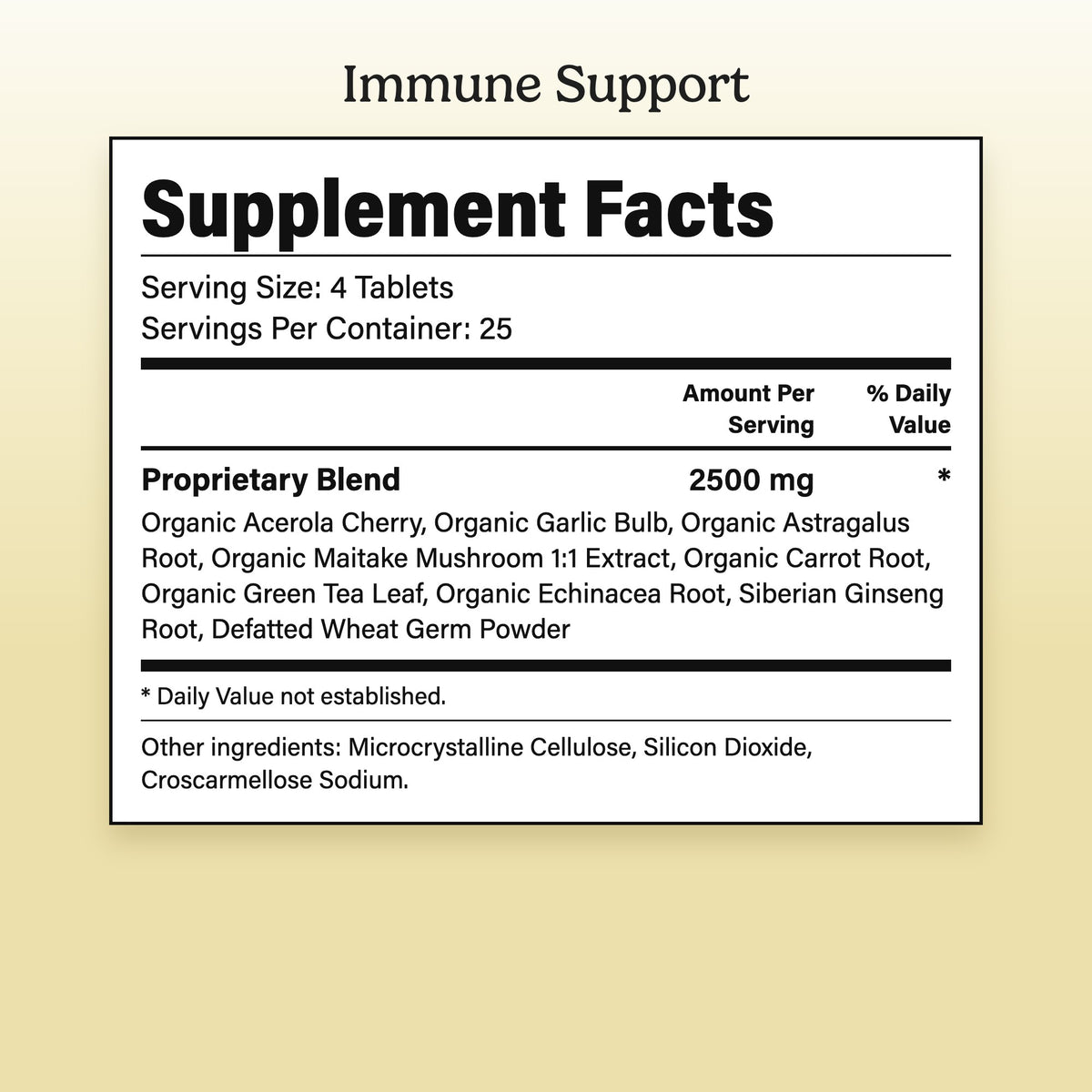
Immune Support contains nine whole foods and herbs, each chosen for its role in supporting your body's natural defenses. There are no isolated vitamins or synthetic chemicals.

Organic Acerola Cherry
Acerola cherry is one of the richest natural sources of vitamin C. Here the vitamin C is contained within the cherry itself, along with bioflavonoids and smaller amounts of vitamin A and B vitamins.

Organic Astragalus
Astragalus is an herb used in Chinese herbal practice for thousands of years. It contains polysaccharides and flavonoids traditionally associated with immune support.

Organic Carrot
Carrot contains beta-carotene, which the body converts to vitamin A as needed. Vitamin A supports the mucous membranes, the body's first physical barrier, and carrot also provides smaller amounts of minerals and other carotenoids.

Organic Garlic
Garlic has been used for centuries, across many cultures, to support the body's natural defenses. It contains allicin and other sulfur-bearing nutrients, and it also supports healthy circulation.

Organic Maitake Mushroom
Maitake is a mushroom with a long history of traditional use in Japan. It contains beta-glucan polysaccharides that support the activity of immune cells. Mushroom supplements vary enormously. Some use the mycelium, the root-like threads the mushroom grows from, and some use the fruiting body. We use the fruiting body, the part of the mushroom people have traditionally eaten.

Organic Green Tea
Green tea contains catechin antioxidants, including epigallocatechin gallate (EGCG), which help protect cells from oxidation. Green tea also provides smaller amounts of vitamins and minerals.

Organic Echinacea
Echinacea has traditionally been used in North American herbal practice to support the immune system, especially in times of increased need. It is one of the best known immune herbs, and it supports white blood cell activity.

Siberian Ginseng
Siberian ginseng (Eleutherococcus senticosus) is an herb traditionally used to help the body handle physical and mental stress, and to support stamina.

Defatted Wheat Germ
Wheat germ is the nutrient-rich heart of the wheat kernel. Defatted wheat germ provides protein, B vitamins and minerals, including zinc.
Other ingredients in the tablet
Microcrystalline cellulose, silicon dioxide, croscarmellose sodium.


How to Take Immune Support
- Suggested use
- 4 tablets daily, or as directed by your healthcare professional.
- When to take it
- Take all 4 tablets at once, or 2 in the morning and 2 in the afternoon.
- What to expect
- Whole food supplements work at your body's own pace. You are feeding your immune system real nutrients that build over weeks and months. See how your body feels.
- During times of greater need
- Some people take more during a stressful stretch or a change of season. Talk with your healthcare provider about what is right for you.
- Pregnant or nursing
- Please check with your physician before taking Immune Support.
- Bottle size
- 100 tablets, a 25-day supply at 4 tablets a day.
What Our Customers Say
“I was reading about the immune system and how few people feed their cells with the right nutrients to protect their health. Immune Support is the answer, especially because it's [a] whole food supplement that doesn't contain the usual chemicals you find in other supplements.”
— Brian
Real, Whole Food Is What the Body Is Meant to Consume
We formulated Immune Support from real, whole foods and herbs because that is what your body recognizes. The vitamin C is within the acerola cherry, the beta-carotene is within the carrot, and the herbs are whole herbs.
If for any reason you are not satisfied after taking Immune Support, we refuse to keep even a penny of your money. Kindly contact us within 90 days of your first order and let us know. We will refund 100% of what you paid.
See how your body feels. Give it what it needs, and nature takes its course.
*Applies to first order only.

Wishing you the best of health,
Vic Shayne
Formulator, Whole Food Formulas
Order Immune Support

Immune Support
- 100 tablets $45.00
Subscribe and save 10% on every order. It comes on your schedule, and you can cancel anytime.
- 90-Day Money-Back Guarantee
- Free Shipping on Orders $200+
- No isolated or synthetic ingredients or artificial vitamins made in a lab
- A Truly Whole Food Formula
Customers who take Immune Support also add
Frequently Asked Questions
How is Immune Support different from other immune supplements?
Immune supplements vary enormously. Some use isolated vitamins such as ascorbic acid and zinc gluconate, some use a single herbal extract, and some use mushroom mycelium instead of the fruiting body. Immune Support contains whole foods and herbs: acerola cherry, astragalus, Maitake mushroom, garlic, echinacea and four more. You can read every ingredient on our label and recognize it as a real food or herb.
Can I take it year-round, or just in the winter?
Year-round. Your immune system works every second of every day, responding to your surroundings, to mental and emotional stress, and to the everyday work of repair. Daily support gives your body the nutrients it needs to do this work steadily. You are building health, not forcing it.
Is this safe to take with medications?
The foods and herbs in Immune Support are generally well tolerated, but always talk with your healthcare provider if you need professional advice, especially if you take prescription medications, are pregnant, or are nursing. Echinacea and astragalus may not be right for people taking medications that affect the immune system. However, whatever your care involves, your body still needs real, whole food nutrients.
Can I take Immune Support with other Whole Food Formulas products?
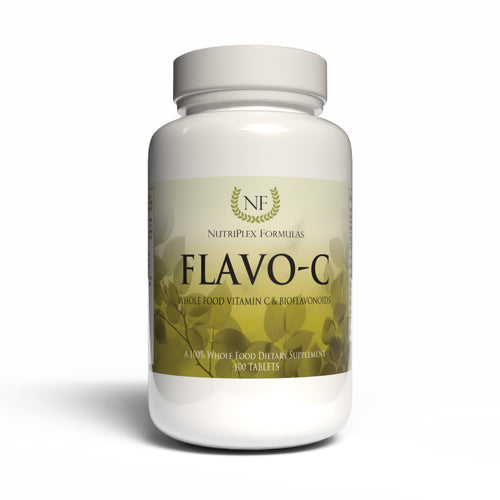
Yes. Many people pair Immune Support with Flavo-C, which contains vitamin C within acerola cherry and camu camu, along with bilberry and other whole foods.
Is Immune Support suitable for people with dietary restrictions?
Immune Support is vegetarian. It contains wheat germ, so it is not gluten-free. It contains no dairy and nothing artificial. If you have specific concerns or allergies, check the full ingredient list on the Supplement Facts panel or contact us.
Why don't you list milligrams on the label?
Our ingredients are whole foods and herbs, not isolated chemicals. Chemicals are measurable because they exist in artificial quantities. Food nutrients, on the other hand, vary from plant to plant, season to season, and the conditions of nature. You can't list exact milligrams of a nutrient while it is still inside its food, because every crop and plant is slightly different, the same way two acerola cherries contain slightly different amounts of vitamin C. What you get instead is the complete nutrient complex instead of an artificial measurement. This is the way nature provides its nutrition.
