
Cardio Food, Caro-C, Cholesterol
The Cholesterol Paradox: Why Your Artery Walls Matter More Than Your Number

Most of us were handed a simple story about cholesterol. High numbers are bad, and if you lower them, you lower your risk. Stay away from fat, don’t eat eggs, take a pill, and watch the test results come down.
This story is oversimplified and misleading. Science journalist Gary Taubes challenged the conventional diet-heart hypothesis, arguing that dietary saturated fat and cholesterol do not directly cause heart disease, and that refined carbohydrates and insulin resistance are the true culprits behind cardiovascular risk. He even showed this by posting his own blood test on his website and comparing it with the foods that he regularly eats.
I've spent more than 30 years studying whole food nutrition and how the body uses what we feed it. In that time, I've come to see cholesterol less as a first-cause and more as a message and part of a process. The question worth asking isn't just "How do I lower my cholesterol?" It's also: “What is my body trying to tell me?”
What Cholesterol Actually Does
Cholesterol isn't a foreign substance. Your body makes it on purpose.
About 80 percent of the cholesterol in your blood is produced by your liver and other cells. The remaining 20 percent comes from food. The reason your body makes this much of it is straightforward: cholesterol is essential. It's a raw material your body uses to build hormones, support brain function, and carry electrical signals along nerve pathways. Without it, none of these systems work properly.
The idea that cholesterol is simply a villain in your bloodstream leaves out most of the picture.
A Crash Course
Here's a crash course on cholesterol.
Damage to the inner lining of blood vessels can arise from many influences, including oxidative stress, chronic inflammation, smoking, hypertension, diabetes, and poor dietary patterns — filled with sugar, refined flour products, artificial ingredients, and other popular nonfoods.
Cholesterol is a vital, normal part of human physiology. The body requires it to build cell membranes, produce hormones like estrogen and testosterone, and make vitamin D. While high levels of LDL cholesterol can lead to cardiovascular disease, viewing cholesterol strictly as a toxin ignores its essential, life-sustaining functions.
Commercial (what most modern people eat on a regular basis) foods’ trans fats, bad fats, altered fats, and other factors that promote inflammation and endothelial (the inside of arterial walls) dysfunction are now widely recognized as important contributors to cardiovascular disease. Rather than focusing on a single laboratory blood test result in isolation, many practitioners advocate improving the overall health of the vascular system through sound nutrition, regular physical activity, adequate sleep, avoidance of smoking, stress reduction, and management of other cardiovascular risk factors.
It’s also important to know that eating cholesterol, like several eggs a day, does not create bad cholesterol and clog your blood vessels. The body makes its own cholesterol. When you eat more, your body makes less. Saturated and trans fats have a much bigger impact on bad cholesterol levels.

Why Artery Walls Matter More Than a Test Number
Blood vessels are living tissues. They stay strong and pliable when they get the right raw materials. When they don't, they weaken, develop small cracks, and begin to deteriorate. This is when your body's patching and healing system kicks in.
The nutrients blood vessels depend on include:
- Vitamin C complex from whole fruits and berries (not isolated ascorbic acid) — associated with healthier, less-thickened arterial walls
- Bioflavonoids (what researchers once called Vitamin P) — help maintain vessel elasticity and strength
- Minerals, particularly potassium, magnesium, and calcium — support the electrical impulses that regulate heart rhythm and the relaxation of smooth muscle in vessel walls
- Carotenoids and fat-soluble antioxidants — protect vessel tissue from oxidative stress
- Omega-3 fatty acids — support vessel integrity and a healthy inflammatory response
None of these are exotic. They're what's in nature’s real foods. Your grocery store should be your primary medicine cabinet, or as the once-famous and much-maligned Henry Bieler, MD, frequently said, “Food is your best medicine.” People used to believe this several generations ago, long before the creation of artificial foods, flavorings, colorings, fast food diets, and so on.
The problem is that most modern diets lack essential, cell-building, heart-protecting nutrients. Diets today are filled with nonfoods that destroy health faster than people can rebuild and recover. And globally, we all now suffer immensely (whether you know it or not) from depleted soils, long food storage times, heavy processing, environmental toxins, and artificial ingredients, including fats, foods, and sweeteners that are not found in nature.

The Role of Trans Fats and Oxidative Stress
Not all dietary fats are the same, and the difference matters enormously for vascular health.
Trans fats — the partially hydrogenated oils that have been a staple of processed food for decades — raise LDL cholesterol and simultaneously lower HDL cholesterol. They are the only class of fatty acids known to have this dual effect. They also directly damage the lining of blood vessels, which is exactly the kind of injury that triggers the cholesterol-as-repair-crew response.
Where are trans fats to be found? Inspect labels on baked goods like crackers, cookies, and pie crusts. Check fried foods, frozen pizzas, and ready-to-use frostings. Examine coffee creamers and stick margarines. Look closely at terms like hydrogenated vegetable oil. Manufacturers sometimes use this broadly and it can mask the presence of partially hydrogenated fats.
Research from Harvard found that women with the highest levels of trans fat in their blood had roughly three times the risk of coronary trouble compared to those with the lowest levels.
This is the mechanism that is easily overlooked when we focus only on the cholesterol number. Trans fats damage the blood vessel wall, which in turn triggers a repair response.
Here's what current vascular biology suggests:
- The endothelium (the inner lining of the artery) becomes injured or dysfunctional through a combination of factors such as hypertension, smoking, diabetes, chronic inflammation, oxidative stress, and, yes, industrial trans fats and other unhealthy dietary patterns.
- LDL (low density lipoprotein) particles can enter the artery wall, particularly where the endothelium is dysfunctional.
- If those LDL particles become retained and oxidized, they trigger an inflammatory response. Immune cells (especially macrophages) ingest the modified LDL, forming foam cells and eventually contributing to plaque.
- The plaque later becomes calcified and develops a fibrous cap as part of the body's attempt to stabilize the lesion.
The other major contributor is oxidative stress: the gradual erosion of blood vessel tissue from unstable molecules called free radicals. This is where antioxidants are needed to do their most important work. Green tea and carotenoids from various colored vegetables are easy wins you can build into a normal week. Grape seed extract, hawthorn, and bilberry matter just as much for that same protective work, though they're not foods most people are realistically sourcing and eating on a regular basis.
Damaged Arteries Lead to Complications with Cholesterol
LDL cholesterol does not ordinarily accumulate in healthy arteries. Changes in the arterial wall appear to precede and promote the retention of LDL particles. This suggests that protecting the health of the artery itself is a critical part of cardiovascular health, rather than focusing exclusively on cholesterol levels.
Arteries must become susceptible before significant LDL retention occurs. So to be clear, some researchers argue that the initial event in atherosclerosis is not simply the presence of LDL in the blood, but changes in the arterial wall that allow LDL particles to become retained. From this perspective, the health and condition of the vessel wall are critical determinants of whether LDL accumulation occurs.
Internal medicine physician Yoshinori Abe, MD, explains, “Cholesterol is essential, but arteries clog when excess LDL penetrates injured vessel walls, oxidizes, and forms plaque that silently narrows blood flow and can trigger heart attack or stroke.”

What Whole Food Support Looks Like
The foods your cardiovascular system responds best to include:
| Food | What it supports |
|---|---|
| Hawthorn | Traditionally used for vascular strength; supports cardiac output and healthy circulation |
| Garlic | Contains nutrients that support blood vessel relaxation and healthy blood flow |
| Grape seed and grape skin | Rich in antioxidants (OPCs) that protect vessel tissue from oxidative damage; associated with the "French Paradox" |
| Bilberry | Supports blood vessel wall strength and circulation; contains anthocyanosides that help maintain vessel integrity |
| Green tea | Supports the inner lining of blood vessels and helps maintain healthy cholesterol balance |
| Beets | Natural nitrates support the vessels' ability to relax and widen |
| Whole food vitamin C | From berries and citrus, not ascorbic acid — associated with healthier arterial walls |
| Leafy greens | Magnesium for vessel relaxation; nitrates to support blood flow |
| Fatty fish, walnuts, flax | Omega-3 fats that support vessel integrity and a healthy inflammatory response |
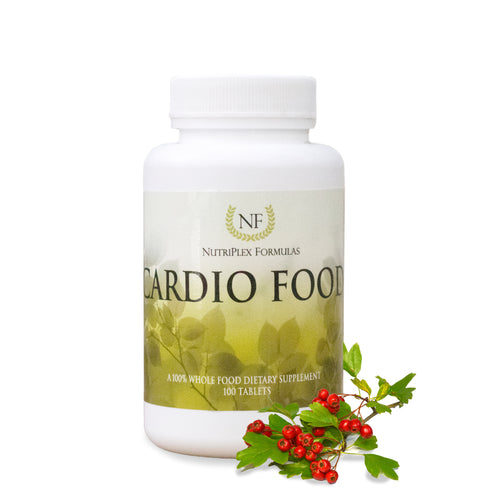
Garlic, leafy greens, berries, and fatty fish are foods you can realistically build into a normal week. Hawthorn, grape seed and grape skin, bilberry, and beets are different — most people aren't sourcing and eating these on any regular basis, even though the nutrients they supply matter just as much. That gap between what the body needs and what people actually eat is why I built Cardio Food around hawthorn, grape seed extract and bilberry.
The "Whole Food" Deception — Read Your Labels
I want to say something about supplement labels, because this is where people often get confused.
Many supplements marketed for heart health and cardiovascular support contain isolated compounds: synthetic versions of nutrients, stripped out and packaged without the naturally occurring cofactors, flavonoids, and synergistic elements that were contained in the original food. Way too many supplement companies sell ascorbic acid and call it vitamin C. They sell isolated beta-carotene and call it carotenoid support. They sell individual minerals without the nutrient matrix that affects how your body uses them.
The difference matters: A whole food that contains vitamin C complex also contains the bioflavonoids, enzymes, and companion nutrients that were always alongside it in the food. Those elements work together. They don't function the same way when you take them apart and put them back in a capsule.
On a label, here's what to look for if you are looking for real whole food nutrients instead of laboratory-made chemicals. Whole food supplements list recognizable foods as ingredients: hawthorn extract, bilberry, grape seed extract, green tea, acerola. Products that rely on isolated or synthetic nutrients only list chemical names: ascorbyl palmitate, dl-alpha-tocopheryl acetate, cyanocobalamin, folic acid (which is not the same as folate, the natural form).

How to Think About Your Numbers
Here is what I'm saying, and what I'm not saying.
I'm not suggesting that cholesterol numbers don't matter or that there's nothing useful in monitoring them. I'm suggesting that the more useful questions are:
- What is the condition of my vessel walls?
- Am I getting enough of the whole food nutrients those walls are built from?
- Am I eating in a way that generates a lot of oxidative stress and arterial damage — or in a way that reduces it?
- Am I consuming trans fats and processed oils that are known to damage vessel linings?
- Is my lifestyle helping or hurting my physical health?
These questions point toward action that actually addresses the underlying situation, not just the number that reflects it.
One more important note. If you have a diagnosed cardiovascular condition, or if you're taking medication for your heart or cholesterol, please bring your nutrition and supplement choices to your doctor or practitioner. Food support can be a useful part of a whole-health approach, but it should be part of a conversation with someone who knows your situation. AND it’s important to note that even under a physician’s care and prescriptions you still need to consume real, natural, clean whole foods. There is just no replacement for nutrients within real, whole foods as the mainstay of your diet. Nothing in this article is a substitute for that relationship.
Two Excellent Supplements
For people looking to support their cardiovascular health through whole food nutrition, two formulas stand out.
Cardio Food is built around the key botanicals and whole foods associated with vascular support: hawthorn, garlic, grape seed extract, bilberry, green tea, ginkgo biloba, cayenne, brewer's yeast, and bovine heart (lyophilized, from grass-fed cattle). The glandular ingredient carries the idea that whole organ tissue provides a full complement of the factors the heart uses to function. Like all NutriPlex Formulas’ products, this formula contains no stearates or artificial ingredients.
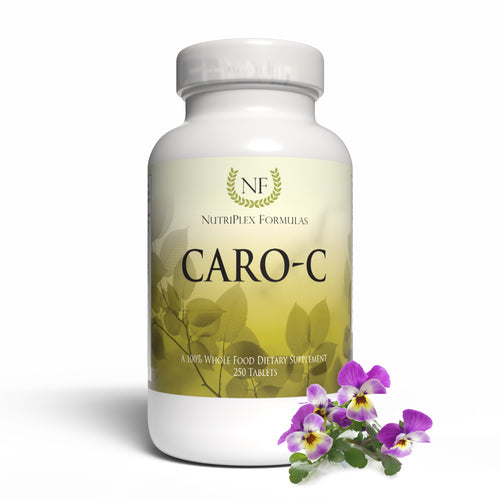
Caro-C provides the vitamins A and C complexes as they exist in whole foods: carotenoids from carrot, spinach, and wild pansy; vitamin C from acerola and orange; alongside bilberry, shiitake mushroom, dandelion, and green tea. This combination supports the structural integrity of capillaries and blood vessel walls — the tissue itself, not just the flow through it.
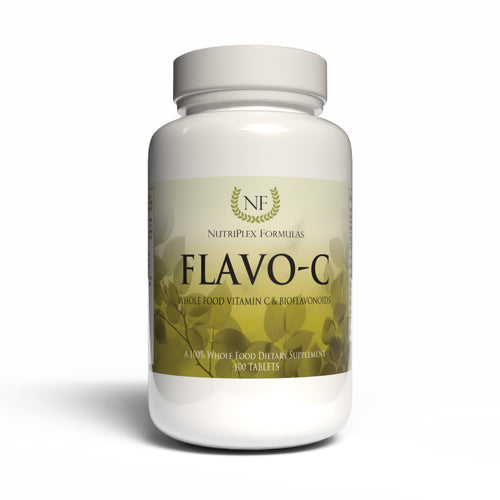
Flavo-C is also helpful because it contains vitamin C–containing foods such as camu and acerola cherry. Vitamin C is essential for general and vascular tissue health, but large clinical trials do not show that taking extra vitamin C supplements prevents heart disease. Major health groups recommend getting nutrients from food instead.
Together they address two different aspects of the cardiovascular picture: Cardio Food supports vascular function and blood flow, and Caro-C supports the condition of the vessel walls.
Frequently Asked Questions
What does it mean that my body makes most of its own cholesterol?
It means cholesterol is a substance your body actively produces because it needs it — for hormone synthesis, brain function, nerve signaling, and cellular repair. The liver and other cells generate roughly 80% of the cholesterol in your blood. Food contributes the rest. This is why cholesterol isn't simply a toxin to be eliminated. It's a substance your body manages actively.
What are trans fats, and why do they matter so much for the heart?
Trans fats are artificially hydrogenated oils found in many processed and packaged foods. They're the only class of dietary fats that simultaneously raise LDL cholesterol and lower HDL cholesterol. Research has also linked them to direct damage of the arterial lining — which is exactly the trigger that prompts the body's cholesterol-based repair response. Avoiding trans fats, even partially, is one of the most direct dietary changes available for vascular health.
What's the difference between whole food vitamin C and ascorbic acid?
Ascorbic acid is the synthetic, isolated form of vitamin C. Whole food vitamin C, as it exists in acerola, camu, rose hips, and citrus, contains a full complement of bioflavonoids, cofactors, and companion nutrients. Research has linked vitamin C intake from fruits and berries specifically — not isolated ascorbic acid — with healthier, less-thickened arterial walls. The context in which a nutrient appears in food affects how the body uses it.
Is there a natural way to support healthy cholesterol balance?
Oats (soluble fiber that binds cholesterol), green tea, and phytosterols from nuts and whole grains are foods you can work into your diet directly. Grape seed extract and artichoke have also been studied in connection with healthy cholesterol levels. Grape seed extract isn't something people typically buy or prepare at home, which is why I include it in Cardio Food rather than pointing people toward the produce aisle. None of these are treatments for high cholesterol — they're foods and food-form nutrients that support the body's natural metabolic processes. If you're managing a cholesterol concern with medication, talk with your doctor before changing your approach.
What whole foods are most important for vascular health?
The ones that come up most consistently in the research I've read over 30 years fall into two groups. Garlic, green tea, dark berries, leafy greens, and foods rich in omega-3 fatty acids (fatty fish, walnuts, flaxseed) are easy wins — foods you can find in any grocery store and build into a normal week. Hawthorn, grape seed and grape skin, bilberry, and beets matter just as much for vessel wall integrity, healthy blood flow, blood pressure regulation, and antioxidant protection, but they're not foods most people are eating on a regular basis. Cardio Food contains hawthorn, grape seed extract and bilberry for exactly this reason.
How long does it take to see results from dietary changes for heart health?
Real, natural support of cardiovascular health is not a quick process. I've seen people begin to notice shifts in how they feel — circulation, energy, hand and foot warmth — over weeks and months of consistent change. This timeline is normal, not a sign that something isn't working. You're building health, not forcing a number. Nature takes its course when you give it the right materials over time. Take an inclusive approach that includes your cardiologist, your diet, lifestyle, and so on.
Is whole food supplementation a substitute for medication?
No. Whole food supplementation is not a treatment for cardiovascular disease, and I would never suggest using it in place of a medical relationship or prescribed care. What it can be is a meaningful part of a whole-health approach to supporting your body's own systems. If you have a diagnosed condition, bring these conversations to your doctor or practitioner.
Products Mentioned in This Article

These statements have not been evaluated by the Food and Drug Administration. This product is not intended to diagnose, treat, cure, or prevent any disease.

