
Cardio Food, Caro-C, Circulation
Heart Health After 50: The Supplements a Nutrition Formulator Recommends

After 50, how to support heart health becomes a serious concern. Much of this has to do with medical reports that can lead you to question every twitch, gas pain, and bout of dizziness. Still, cardiovascular problems no doubt escalate the older we get, which is one of the reasons cardio/heart supplements are such big sellers. People want to know which supplements are worth taking, which ones are overhyped, and whether someone could explain things in simpler terms. So, let’s give it a try…
I've been formulating whole food supplements for over 30 years. This includes a great deal of time studying nutrition and writing about it. What I've seen consistently is that the best supplements for heart health for people over 50 aren't the most heavily marketed ones. They're the ones that feature real food rather than isolated, artificial chemicals — and they work because the heart, like every other organ in your body, is nourished by food.
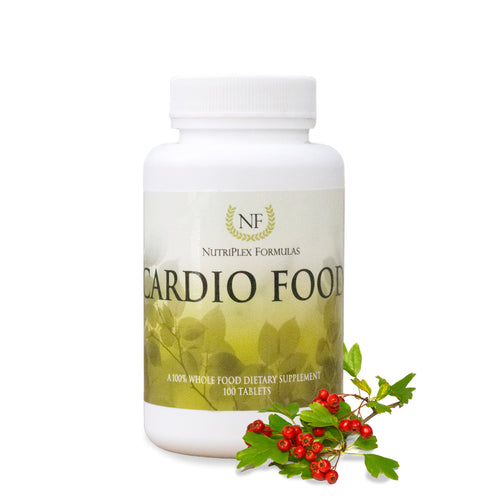
And, this is important: whole food nutrition is not a replacement for medical care. If you're working with a cardiologist, keep doing that. Your body still needs a steady supply of nutrients either way, and that's where a formula like NutriPlex Formulas’ Cardio Food fits in.
This article explains the food-first approach. My goal is to give you a clear picture of how nature’s nutrients actually support cardiovascular health, so you can make informed decisions — not just follow the loudest advertisements.
Why "Over 50" Changes the Conversation
There's a reason heart health becomes a higher priority after 50.
The body's ability to produce certain nutrients on its own starts to decline. Coenzyme Q10 — essential for heart muscle energy production — is one example. Younger bodies synthesize it readily. After 50, that production tends to slow, which means that dietary sources matter more.
Arterial flexibility changes with age. Maintaining adequate nutrition, including vitamin C and other nutrients involved in collagen formation, antioxidant protection, and vascular function, helps support the integrity of blood vessels. Vitamin C, for example, is required for collagen synthesis and plays several important roles in maintaining the vascular endothelium (inner linings of the blood vessels). When nutrition is poor over many years, along with other factors that place stress on the vascular system, arteries can gradually become stiffer and less elastic.
Atherosclerosis (clogged arteries) is a gradual process. Fats, calcium, cholesterol, and other substances can accumulate within the arterial wall. This situation can lead to inflammation that eventually leads to plaque and, in some cases, calcification. The process develops over many years, which is why what you do consistently over time matters far more to the health of your blood vessels than any short-term intervention.
The good news: real, clean food and organic whole food supplements feed the cardiovascular function at any age. Along with exercise and stress reduction, the right foods are one of the foundations of a healthy heart. The body responds to what you feed it. This is the part I want to focus on.

What the Heart Actually Needs
Before discussing which supplements support heart health, it helps to understand what the cardiovascular system requires to function well.
The heart is a muscle that works every minute of your life. Unlike your calves or biceps, it never gets to stop and rest. The reason why is obvious.
The heart needs a steady supply of oxygen, minerals for electrical signaling, and nutrients that keep the blood vessels open and flexible. Here are some details:
Blood vessel integrity depends on vitamin C complex, vitamin A, and bioflavonoids, which are central to the nutrition picture. The vitamin C found in whole foods — acerola berry, camu, and other fruits and vegetables — comes naturally packaged alongside dozens of cofactors that help maintain the structural integrity of blood vessel walls. On the other hand, isolated ascorbic acid, the synthetic version found in most supplements, is a different thing entirely. It's one singular isolated chemical from a process that begins with corn syrup. And it’s not natural by any means. A whole food, by contrast, includes the vitamin C complex as it’s found in nature along with rutin, hesperidin, quercetin, anthocyanins, and other phytonutrients that work together in ways science has yet to identify.
Minerals support rhythm and function, because the heart's electrical system depends on adequate potassium, magnesium, calcium, and other minerals. Magnesium deficiency, in particular, is common in people with cardiovascular concerns. Nature’s minerals come in their most usable form, from whole foods — leafy greens, veggies, meats, and whole grains — not from isolated mineral salts that are found in nearly every supplement on the market today. Beet root offers many of these important minerals, but few people get them on their dinner plate.
Antioxidant protection matters, because arteries are under constant oxidative stress from normal metabolism, environmental toxins, and dietary choices. Carotenoids — the pigments in carrots, spinach, and orange vegetables — act as protective antioxidants in the cardiovascular system. They keep oxygen-destroying molecules (free radicals) from destroying the heart, valves, and blood vessels. Lycopene, beta-carotene, lutein, and their cousins help protect blood vessel linings from damage.
Anti-inflammatory support is vital, because chronic low-grade inflammation is closely tied to arterial health. Foods with natural anti-inflammatory properties — garlic, hawthorn berry, bilberry, green tea — have been researched for their cardiovascular benefits.
The items on this brief list aren't separate conversations. They're all part of the same whole food approach to cardiovascular nutrition. All of these nutrients should be part of the regular diet, especially for anyone over age 50.
The Whole Food Difference — and Why It Matters
Way too many supplement companies sell "heart health" products that are combinations of isolated chemicals: isolated CoQ10 synthesized in a lab, synthetic vitamin C (ascorbic acid) pressed into a tablet, mineral salts mined from the ground.
Isolated compounds are cheap to produce and easy to standardize. But they're not food, and your body knows the difference. Our species did not evolve to consume vitamin and mineral pills; we evolved to eat a variety of nature’s whole, unsprayed foods.
Foods are what human bodies recognize as friendly substances. When you eat a hawthorn berry, you're getting OPCs (oligomeric proanthocyanidins), flavonoids, triterpene acids, and dozens of other nutrients that work together. When a supplement manufacturer extracts one compound out of a food and concentrates it, the other factors that make the whole food work get left behind. And worse, when a manufacturer creates a chemical that resembles a food nutrient, you’re getting something artificial, something that doesn’t exist in the natural world.
The research on whole food polyphenols — the compounds found in berries, grapes, green tea, and other plant foods — consistently shows that the natural complex outperforms isolated fractions. The phytochemicals in foods work additively and synergistically. A balanced natural combination cannot be replicated by isolated supplements.

Foods and Herbs With the Strongest Cardiovascular Research
The above nutrients are in the whole foods I draw on in my formulating work, and in conversations with clients about heart health support.
Hawthorn Berry
Hawthorn (Crataegus species) has one of the longest histories of use for heart support in both European and traditional Chinese herbal medicine. The research on hawthorn berries is substantial. This food has been studied for its potential role in supporting heart muscle function, healthy circulation, and normal vascular (blood vessel) tone. The active nutrients — OPCs and flavonoids — may also support healthy LDL cholesterol levels that are already within a normal range.
Hawthorn is a real food, not a synthetic chemical. This distinction matters.
Garlic
Garlic (Allium sativum) contains sulfur compounds that can increase the body's production of nitric oxide and hydrogen sulfide—two signaling molecules that help blood vessels relax and maintain healthy circulation. Clinical studies have examined garlic's effects on blood pressure already within a normal range, along with normal endothelial (the inside of blood vessels) function and healthy blood flow. Garlic has also been studied for its role in normal platelet activity, which supports healthy circulation.
The polysulfides in garlic are part of a complex that includes allicin, organosulfur compounds, and flavanols like kaempferol. The whole food form provides all of these together. Aged garlic products or isolated extracts concentrate some compounds and lose others.
Grape Seed Extract
Grape seed extract is one of the most researched antioxidant foods for cardiovascular support. The OPCs in grape seed have been shown to be roughly 20 times more antioxidant than vitamin E and about 50 times more than isolated vitamin C. They help protect tissue from oxidative damage and support healthy blood vessel tone.
Research on grape seed extract has examined its effects on LDL cholesterol and cardiovascular risk factors, including blood pressure. These benefits are associated with grape seed oligomeric proanthocyanidins (OPCs), the same class of polyphenols that helped spark interest in what’s been called the French Paradox — the observation that traditional grape- and wine-rich diets were associated with lower-than-expected cardiovascular disease rates.
Bilberry
Bilberry (Vaccinium myrtillus) is a European relative of the blueberry and one of the richest dietary sources of anthocyanins — the polyphenols responsible for its deep blue-purple color. Research on bilberry and other anthocyanin-rich berries suggests these compounds support cardiovascular health by helping maintain healthy endothelial function, promoting normal blood vessel flexibility, and supporting healthy circulation.
Bilberry anthocyanins have also been studied for their effects on oxidative stress, inflammation, and platelet activity — mechanisms that play important roles in maintaining normal blood flow. Research on deeply pigmented berries as a group suggests that their anthocyanins may contribute to vascular health, including supporting arterial function and protecting cells against oxidative damage.
Ginkgo Biloba
Ginkgo biloba supports peripheral circulation — the blood flow to the extremities such as feet, toes, fingers and arms, the eyes, and the brain. Neurovascular research has shown ginkgo's role in supporting blood flow and helping protect against the kind of damage that comes from reduced oxygen supply. Ginkgo also has effects on platelet aggregation, which relates to healthy blood flow.
Research has also examined ginkgo’s effects on platelet-activating factor and platelet aggregation, which may help explain its traditional use in supporting circulation. Because ginkgo can influence platelet activity, individuals taking anticoagulant or antiplatelet medications should consult a healthcare professional before using it.
One important note: if you're taking blood-thinning medications, work with a healthcare professional before adding ginkgo. It’s always best to be safe and recognize your body’s limits.
Green Tea
Green tea contains polyphenols called catechins, particularly epigallocatechin gallate (EGCG), which have been widely studied for their effects on cardiovascular health. Research suggests that green tea catechins may support healthy cholesterol levels, triglycerides, blood pressure, and endothelial function through antioxidant and metabolic effects.
Studies suggest that green tea compounds may reduce intestinal absorption of dietary fats and cholesterol while influencing cholesterol metabolism. Long-term observational research has also associated regular green tea consumption with cardiovascular benefits, although overall dietary patterns and lifestyle factors remain important contributors to heart health. Drinking 2-3 cups of green tea daily has been a standard recommendation in traditional health systems for centuries.
Carotenoids
The carotenoid family — beta-carotene, alpha-carotene, lycopene, lutein, zeaxanthin — are the pigments in orange, red, and yellow vegetables. They function as antioxidants in the cardiovascular system, helping protect blood vessel linings from oxidative damage.
Lycopene in particular has been studied for its relationship to blood vessel pliability and healthy cholesterol balance. Spinach and carrots provide alpha- and beta-carotene, along with lutein. The carotenoids in foods come packaged with vitamin A complex, vitamin C, minerals, and other factors that support their absorption and activity. In isolation, individual carotenoids don't perform as well as they do in the whole food context.
Vitamin C Complex from Whole Foods
Vitamin C complex — as it exists in acerola berry, camu, rose hips, green vegetables, peppers, and citrus — is essential for the structural integrity of blood vessel walls. Collagen synthesis in blood vessels requires vitamin C. Research has associated higher vitamin C intake from whole foods with less thickening of the carotid artery — a measure of arterial health.
The "complex" distinction matters here. What's sold as high-dose vitamin C in a typical supplement is ascorbic acid — one isolated chemical. It's not the same as the vitamin C complex in a food. The full complex includes rutin, quercetin, hesperidin, kaempferol, anthocyanins, and the J and K factors that researchers identified decades ago as essential cofactors.
Ascorbic acid is not a whole food source of vitamin C, because it's an isolated chemical that doesn't contain any other important nutrients found in nature's foods.

What a Misleading, Confusing Label Looks Like
Many supplement companies market their products as “whole food” or “natural,” but those terms can be misleading. Some products begin with synthetic vitamins or isolated nutrients that are added to a yeast culture, fermented medium, or vegetable powder base and then marketed as being “from” or “derived from” whole foods. While these processes may use food-based carriers, the final product is not equivalent to nutrients naturally occurring within whole foods, where vitamins, minerals, enzymes, phytonutrients, and other compounds exist together in a complex biological matrix.
Other companies commonly infuse or spike their whole food formulas with artificial and isolated vitamins, minerals, flavonoids, and so on. However, they market these products as whole foods without any explanation about what they are doing.
When you're reading a supplement label, be sure to check the “Other Ingredients” section as carefully as the active ingredients. Look for synthetic vitamin forms: dl-alpha tocopherol (synthetic E), cyanocobalamin (synthetic B12), folic acid (synthetic folate), and ascorbic acid (synthetic C). If you see these in a product marketed as "whole food" or "natural," you're seeing through the trick.
Also look for: stearic acid and magnesium stearate as tableting and encapsulating agents (synthetic additives that some biochemists claim act similarly to trans fats). Many companies use them to cut manufacturing costs when there are natural alternatives. Also watch for titanium dioxide, artificial colors, petroleum-based fillers, disodium phosphate, ascorbic acid, and polyethylene glycol.
What you want to see in a cardiovascular supplement is a list of specialized whole foods — berry extracts, herbs, and real foods — not the names of chemical compounds.

What to Expect Over Time
Building health with nutrition is a gradual process. You feed your body the needed nutrients and then nature takes its course. Put it this way: If you scratch your arm or get a bruise, it doesn’t go away in a day or two. What’s going on inside your body also needs time to grow stronger.
Whole food nutrition works gradually, in concert with the body's natural processes: supporting healthy blood vessel walls and a healthy inflammatory response, and providing the mineral and vitamin cofactors the heart muscle uses every day.
Some people notice a difference within a few weeks; for others it takes longer. Fuller changes — improved energy, steadier circulation, a sense of physical ease — tend to develop over months. The longer the nutritional foundation has been in place, the more stable the effects can become. You are building health, not forcing it.
See how your body feels. Pay attention to energy levels, exercise tolerance, and general vitality. Work with your doctor and do all you can do to support a healthy heart and circulatory system. Your energy, exercise tolerance, and vitality are signals that nutritional support is working, and they're often more informative than any single lab test number.
A Comparison: Whole Food vs. Isolated Supplement Approaches
| Feature | Whole Food Approach | Typical Isolated Supplement |
|---|---|---|
| Vitamin C source | Acerola berry, camu camu, rose hips | Ascorbic acid (from corn syrup fermentation) |
| Antioxidant delivery | Full phytochemical complex | Single extracted compound |
| Mineral forms | Naturally occurring in food matrix | Isolated salts (oxide, citrate, carbonate) |
| Heart herb support | Whole food hawthorn, bilberry, garlic | Extracted single-compound fractions, or just the active ingredient of the herb |
| Cofactors included | Yes — as found in nature | None |
| Stearates in formula | Not in quality whole food products or in the “other ingredients” list | Common (stearic acid, magnesium stearate) |
| Body recognition | High — foods are what the body is designed for | Lower — synthetic chemicals are foreign |
| Onset | Over weeks and months | Can force measurable changes but they are not real food nutrients |
FAQ
What is the best supplement for heart health after 50?
There is no single best supplement. The cardiovascular system needs a range of whole food nutrients — vitamin C complex, flavonoids, carotenoids, minerals, coQ10, and plants like hawthorn, garlic, bilberry, grape skin, and grape seed, to name a few important ones. A whole food formula that provides all of these together is generally more useful than taking isolated compounds separately.
Is CoQ10 important for heart health over 50?
CoQ10 is essential for energy production in heart muscle cells. The body's ability to synthesize it tends to decline with age, which is why food sources and supplementation become more relevant after 50. CoQ10 is concentrated in foods that you may or may not eat regularly — organ meats like beef heart and liver, along with fresh sardines and mackerel — which is exactly why Cardio Food includes lyophilized bovine heart, a whole food CoQ10 source, and why that matters after 50. Top plant sources for CoQ10 include peanuts, pistachios, sesame seeds, soybeans, and spinach
What's the difference between ascorbic acid and whole food vitamin C?
Ascorbic acid is an isolated chemical produced through industrial fermentation, typically starting with corn syrup. Whole food vitamin C — as found in acerola berry or camu — contains ascorbic acid as one part of a larger complex that includes bioflavonoids, enzymes, and cofactors. The body absorbs and uses the full complex differently than it does isolated ascorbic acid.
Are there foods I should eat more of for heart health?
Yes. Deeply pigmented vegetables and fruits — carrots, spinach, blueberries, beets — provide carotenoids, vitamin C complex, and flavonoids. Garlic and onions provide organosulfur compounds. Fatty fish provide omega-3 fatty acids. Whole grains, nuts, and seeds provide phytosterols and magnesium. The Mediterranean dietary pattern — generous vegetables and fruits, olive oil, fish, nuts, moderate whole grains — is one of the most studied for cardiovascular health. Beets provide many of these same nutrients, but they're not something most people eat regularly — that's one of the reasons I include beets in the formulas I make.
How long does it take for heart health supplements to work?
Whole food nutrition works gradually. Some people notice improved energy and circulation within a few weeks. More meaningful changes — to blood vessel flexibility, healthy cholesterol balance, overall cardiovascular function — tend to develop over months of consistent use. This is how real, natural building of health works. It's not a quick fix, and I wouldn't trust any supplement that promises one.
Is hawthorn berry safe to take every day?
Hawthorn has a long history of use and is generally well-tolerated. If you're taking medications for heart conditions, discuss any new supplements with your healthcare provider. Hawthorn has real physiological effects on cardiovascular function, which is why it's worth talking with a practitioner if you have an existing condition being medically managed.
What should I look for on a supplement label for heart health?
Look for whole foods you recognize — hawthorn berry, bilberry, grape seed extract, garlic, green tea — rather than isolated vitamin and mineral names. Check the Other Ingredients section for stearic acid, magnesium stearate, titanium dioxide, and artificial colors and natural flavoring. Avoid products that list cyanocobalamin, dl-alpha tocopherol, folic acid, or ascorbic acid as their main vitamin sources.
Can supplements replace a heart-healthy diet?
No. Supplements are meant to support a sound exercise and stress-reduction plan, as well as a solid dietary foundation. The cardiovascular benefits of whole food nutrition come primarily from what you eat day to day — vegetables, fruits, whole grains, healthy fats, fish — and are reinforced by well-chosen supplements. I always encourage people to take a mind-body approach to their healthcare along with whole food supplements and anything your cardiologist suggests.
Products Mentioned in This Article

These statements have not been evaluated by the Food and Drug Administration. This product is not intended to diagnose, treat, cure, or prevent any disease.