
Acerola Cherry, Ascorbic Acid, Bioflavonoids
Acerola Cherry and Camu Camu Vitamin C: Why Whole Fruit Outperforms Ascorbic Acid

If you've been taking vitamin C for years and never felt much of anything, the problem may not be the amount you're taking. It may be what's in the bottle.
Almost every vitamin C supplement on the shelf is ascorbic acid — a single chemical made in a factory. The vitamin C in a real fruit is something else entirely. It arrives with bioflavonoids, rutin, tyrosinase, and a set of helper nutrients that are still contained within the food itself, exactly as nature assembled them.
Acerola cherry and camu camu are the two whole foods I keep coming back to as a formulator, because they carry that complete complex better than anything else I've worked with. Here's what that difference actually looks like, and why it matters more than the number on the label.
What Is Acerola Cherry?
Acerola (Malpighia glabra) is a small, bright red fruit native to the Amazon Basin, Central America, South America, and the Caribbean. It's also called Barbados cherry or West Indian cherry. The fruit has been used for centuries in traditional diets across tropical regions.
What makes acerola special is its high vitamin C content. Ounce for ounce, acerola cherry contains roughly 50 to 100 times more vitamin C than an orange. But the content alone isn't the real story. The real story is the bioflavonoids, rutin, and other cofactors that are contained in the fruit alongside it, all working together within one nutrient complex.
Camu camu (Myrciaria dubia), which grows wild in the Amazon jungle basin, contains roughly 30 to 60 times more vitamin C than an orange by weight. That makes it one of the richest whole foods for vitamin C we know of.
When you eat acerola cherry and camu, you're not getting an isolated chemical. You're getting a whole food. And your body knows what to do with it.

Whole Food Vitamin C Compared
Not all vitamin C is the same. Most of what's on the shelf is synthetic. Here's how the most common options stack up:
| Vitamin C | Bioflavonoids | Cofactors intact | The short version |
|---|---|---|---|
| Acerola cherry | Yes — rutin, quercetin, hesperidin, and more | Yes — full complex | The broadest cofactor profile of nearly any fruit |
| Camu camu | Yes — some | Yes | The highest content of any known fruit. Less widely available, and it costs more |
| Rosehips | Yes — moderate | Partially | Gentler on the stomach, and a good addition to a blend |
| Ascorbic acid (synthetic) | No | No | Made from corn syrup. One fraction of the complex |
The table tells a clear story. Whole foods deliver vitamin C as part of a larger nutritional package. Synthetic ascorbic acid delivers a single chemical created in a laboratory.
There is more to each of these than a table can hold. Camu also carries anthocyanins, catechins, kaempferol, and quercetin, along with potassium, calcium, zinc, magnesium, manganese, and copper — those nutrients are part of what makes our Flavo-C formula valuable beyond its vitamin C. Rosehips bring carotenoids such as lycopene and beta-carotene, plus vitamin E and a range of minerals. Acerola's own cofactor list runs to anthocyanins, catechins, and chlorogenic acid on top of the bioflavonoids above.
Ascorbic Acid Is Not Vitamin C
Ascorbic acid is referred to as vitamin C, but it is an artificial version of the vitamin C complex made in a laboratory. As a chemical it is real, and it is measurable. But it is not the whole picture, and it is definitely not natural.
A real food's full vitamin C complex includes bioflavonoids, rutin, tyrosinase (a copper-containing enzyme), and many other naturally occurring food cofactors. These parts work together in a complex, or matrix. They were never meant to be separated.
When you consume isolated ascorbic acid, your body has to draw the missing cofactors out of its own stores to make use of what you've swallowed. If those stores are already low — which they often are — the isolated fraction can't deliver much of what your body is looking for.
This is why whole food vitamin C from acerola cherry and camu is fundamentally different from what sits in most supplement bottles. If you want a broader look at that distinction across every vitamin, I wrote about it in what whole food supplements actually are.
The Vitamin C Complex — More Than Ascorbic Acid
Most nutrition textbooks reduce vitamin C to ascorbic acid. They identify vitamin C primarily as ascorbic acid and don't bother to teach that this is not the same vitamin C you get from one of nature's foods. The philosophy behind chemical isolates comes out of a reductionist, pharmacological paradigm. The body is not reductionist. It is whole, and it needs whole foods. Isolated ascorbic acid does not represent the complexity of vitamin C as it exists in nature, so calling it vitamin C is a common oversimplification.
The pioneers who developed the concept of nutritional complexes in the mid-twentieth century described vitamin C as a group of interacting parts. Each one has a role. Remove any piece and you lose the synergy.
Here is a sample of what the full vitamin C complex actually contains.
Ascorbic acid does two critical things: it protects the other ingredients in a supplement from oxidation by reacting with oxygen before they can, and it protects the body from oxidation by acting as a powerful antioxidant — fighting free radicals and helping return used vitamin E to active form. Those are real functions. Isolated ascorbic acid is also the only part of the complex most supplements provide.
Bioflavonoids (the P factor) work directly with vitamin C to support capillary strength and blood vessel integrity. Without them, vitamin C can't do its full work on connective tissue. Common bioflavonoids include quercetin, hesperidin, and rutin.
Rutin supports capillary walls and helps maintain their permeability. It works closely with vitamin C in connective tissue, artery, and vein maintenance.
Tyrosinase is a copper-containing enzyme found in the vitamin C complex. It plays a central role in skin pigmentation and therefore affects even skin coloration. Copper is essential for iron metabolism, and tyrosinase informs the cells how to use vitamin C and certain trace minerals.
The J factor supports the oxygen-carrying capacity of blood. It is contained naturally in whole foods and lost entirely when vitamin C is reduced to ascorbic acid.
The K factor is involved in the immune-supporting properties of the vitamin C complex.
These are the naturally existing food nutrients that make vitamin C work in the body the way food vitamin C has always worked. When a manufacturer strips all of them away and puts isolated ascorbic acid in a bottle, they are offering a chemical in place of a true nutrient.
This is also why megadoses of ascorbic acid don't produce what modest amounts of vitamin C do when it is still contained within a whole food. The dose isn't the solution. The missing complex is the needed factor.

How Most Vitamin C Supplements Are Made
Most commercial vitamin C supplements are manufactured from glucose derived from corn, usually corn syrup or corn starch. Through an industrial chemical process, that glucose is converted into ascorbic acid, which is then identified and labeled as vitamin C on a lab report.
The vitamin C in most supplements is not squeezed from oranges or extracted from cherries. It is a laboratory-made chemical built to resemble the molecular formula of one part of the naturally occurring vitamin C complex. At best it is that one part, and it does not address the other nutrients your body needs alongside vitamin C.
The bottle might show a picture of an orange or a lemon. The marketing might say "with rose hips," usually a trivial amount added for label appeal. But the active ingredient is the same industrially produced ascorbic acid.
Your body can tell the difference between a food and a chemical. That is biochemistry, not philosophy. If you want to check what's in your own cabinet, I put together a walkthrough on how to tell if your vitamins are synthetic.
What Bioflavonoids Do (and Why They're Missing)
Bioflavonoids are plant nutrients that occur naturally alongside vitamin C in fruits and vegetables. Common ones include rutin, quercetin, and hesperidin. They are not vitamins in the traditional sense, but they serve an important role in your nutrition.
Bioflavonoids support:
- Capillary, valve, vein, and artery strength and integrity
- Antioxidant activity, helping prevent vitamin C itself from being destroyed by oxidation
- Collagen support, working alongside vitamin C to maintain connective tissue
- Blood vessel elasticity and integrity
When you eat an acerola cherry or a camu berry instead of laboratory-created vitamin C, the bioflavonoids are already contained in the fruit as part of one package of nutrients. When you take isolated ascorbic acid, those bioflavonoids and the other cofactors have been left out.
This is one reason people who eat diets rich in fruits and vegetables tend to do better than people relying on isolated vitamin C. The food delivers the full complex. The supplement delivers an artificial fragment.

Acerola Cherry vs. Other Whole Food Vitamin C
If you're choosing a whole food vitamin C, you have several good options. Each has its own nutritional profile.
Acerola cherry and camu are the most well-rounded. They carry an exceptionally high vitamin C content and a broad profile of bioflavonoids and cofactors, which means you get the complete vitamin C complex from a single fruit rather than the artificial isolate of ascorbic acid. This is why both fruits are primary ingredients in our formulas.
Camu delivers even more vitamin C per gram than acerola. It works as a complementary ingredient alongside acerola, and that is exactly how we use it in our Flavo-C formula.
Rosehips are gentler on the stomach, which makes them a good choice for people with sensitive digestion. They contain a moderate amount of vitamin C along with bioflavonoids, though less than acerola or camu. Rosehips are often used in teas and as a secondary ingredient in supplements.
If you are looking for a whole food vitamin C supplement, think camu and acerola cherry. These fruits provide the broadest nutritional benefit, and they are not created in a laboratory.
How Acerola Cherry and Camu Deliver Vitamin C Differently
Acerola cherry and camu provide vitamin C the way nature packaged it, as a whole food with all of its companion nutrients still intact.
Beyond the vitamin C complex and bioflavonoids, acerola cherry also contains carotenoids (beta-carotene, lutein, beta-cryptoxanthin), along with smaller amounts of magnesium, pantothenic acid, potassium, vitamin A, thiamin, riboflavin, niacin, calcium, protein, iron, and phosphorus. Camu adds anthocyanins, catechins, kaempferol, quercetin, and a range of minerals of its own.
This is the principle behind whole food supplementation. We are not isolating one chemical and delivering it in megadoses. We are providing complete foods your body can recognize, break down, and put to work, the same way it would handle a handful of cherries.
Your body doesn't have to complete the complex on its own. Nature already did.

What the Vitamin C Complex Supports
The full vitamin C complex — not just ascorbic acid, but the complete food form — plays a role in several important functions:
- Collagen formation, which maintains skin, blood vessels, bones, and connective tissue
- Antioxidant recycling, helping regenerate other antioxidants in the body and extend their protective effects
- White blood cell function, supporting the production and activity of the cells at the center of immune defense
- Adrenal gland support, since the adrenal glands hold one of the highest concentrations of vitamin C in the body and draw on it heavily during periods of stress
- Capillary and blood vessel integrity, with bioflavonoids working alongside vitamin C to help maintain the strength and flexibility of vessel walls
- Tissue repair, supporting the body's own natural repair processes
These aren't theoretical benefits. They are basic nutritional biochemistry. And they work best when the vitamin C is still contained within a real food complex rather than isolated into a chemical.
How to Get More Whole Food Vitamin C
The simplest answer is to eat more fresh, organically grown fruits and vegetables. Acerola cherries, camu, citrus fruits, berries, broccoli, and bell peppers are all rich in the vitamin C complex. Fresher is better, since vitamin C diminishes with excessive heat, air, and storage time.
Most diets today fall short, though, especially during periods of high stress, illness, or recovery. That is where whole food vitamin C supplementation comes in.
The key is choosing a supplement that delivers the complete vitamin C complex from real whole foods, not isolated ascorbic acid with a picture of fruit on the label.
At Whole Food Formulas, we offer two products built around acerola cherry:
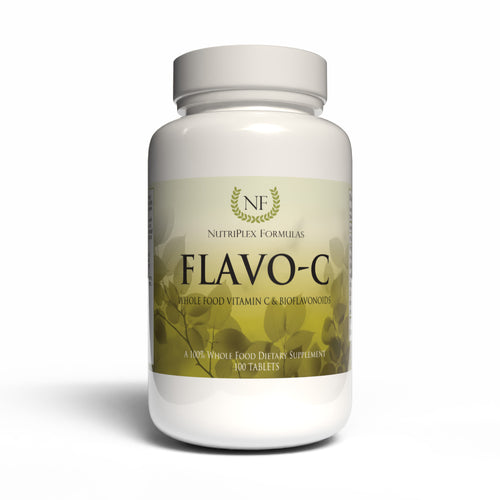
- Flavo-C contains organic acerola cherry and organic camu camu along with bilberry, echinacea root, wild pansy, and horse chestnut leaf. It delivers the vitamin C complex the way nature assembled it, as food.
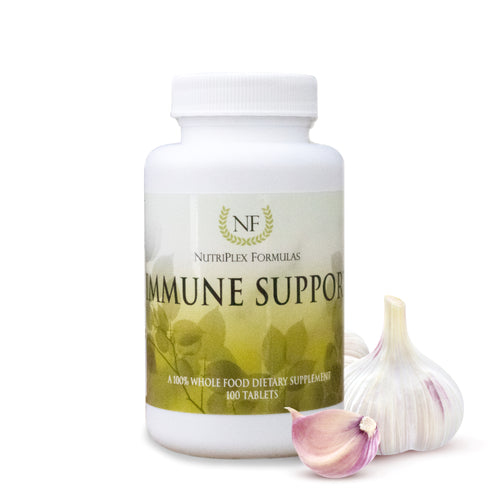
- Immune Support also contains organic acerola cherry, as part of a broader whole food and herbal formula that includes garlic, astragalus, maitake mushroom, carrot root, and green tea.
Both are whole food supplements, made without isolated ascorbic acid or synthetic chemicals. They are food in tablet form.

Frequently Asked Questions
Are camu and acerola cherry better than ascorbic acid for vitamin C?
Acerola cherry provides the full vitamin C complex — ascorbic acid plus bioflavonoids, rutin, minerals, and other naturally occurring cofactors. Isolated ascorbic acid delivers only one fraction of this complex, and it isn't even natural. Your body works with the complete food form because all of the companion nutrients are already contained within it.
How much vitamin C is in acerola cherry compared to an orange?
Acerola cherry contains roughly 50 to 100 times more vitamin C per ounce than an orange. But that amount is only part of the advantage. What makes acerola cherry valuable are the naturally occurring bioflavonoids and cofactors contained in the fruit alongside the vitamin C. All of the nutrients in these fruits work together as a unit.
Is the ascorbic acid in supplements made from fruit?
It rarely is. Most supplemental ascorbic acid is manufactured through a process that begins with corn syrup, a form of processed sugar, which is then chemically converted into isolated ascorbic acid. Despite the fruit imagery on many labels, the ingredient itself is industrially produced.
Can I get enough vitamin C from food alone?
Fresh fruits and vegetables are excellent for the vitamin C complex. However, many people do not eat a nutrient-dense diet, so during periods of stress, illness, or recovery they may benefit from supplementation. The key is choosing a whole food vitamin C supplement that delivers the full complex rather than isolated ascorbic acid.
Is acerola cherry safe during pregnancy?
Acerola cherry is a food, and foods containing vitamin C are generally considered safe. Supplementation during pregnancy is a conversation to have with your healthcare provider, who can evaluate your specific needs. Our product labels note that our supplements are not intended for pregnant or lactating women without the consent of a physician, so always consult your doctor about your own situation.
Can I take acerola cherry with other vitamin C supplements?
You can, but there is usually no reason to. If you are already taking a whole food vitamin C supplement made with acerola cherry and other foods, adding isolated ascorbic acid on top doesn't give you anything the food form isn't already providing. The whole food carries the cofactors that isolated ascorbic acid is missing. Taking both at once is a bit like eating an orange and then swallowing a vitamin C pill, when the orange already had what you needed.
How is whole food vitamin C different from "vitamin C with rose hips"?
This is a common point of confusion. Many supplement companies add a small amount of rose hip powder to an otherwise synthetic ascorbic acid formula and market it as a more natural product. Check the label. If the primary ingredient is still ascorbic acid and the rose hips appear far down the list, you are getting a synthetic vitamin with a dash of food added for marketing. A true whole food vitamin C supplement names the foods — acerola cherry or camu — as the actual origin of the vitamin C, not as a garnish.
How long does it take to notice a difference with whole food vitamin C?
That depends on where you are starting from. People who have been significantly low in vitamin C sometimes notice changes within days. For most people, the difference builds over weeks and months as the body receives the full complex consistently and uses it to build and maintain tissue structure and function. Real support is a bodily process that takes time. You feed your body the nutrients it needs, and then nature takes its course.
Products Mentioned in This Article

These statements have not been evaluated by the Food and Drug Administration. This product is not intended to diagnose, treat, cure, or prevent any disease.