
Ascorbic Acid, Food-Based, Supplement Cost
Why Whole Food Vitamins Cost More (and Why It Matters)

You've seen it before. You're standing in the supplement aisle or scrolling online, and a bottle of synthetic multivitamins is $15. Next to it, a whole food supplement is $40. The vitamins listed on the front look the same. The promises sound the same. But the price tags are very different.
So why do whole food vitamins cost more?
The short answer: real food costs more than chemicals made in a laboratory. Whole food supplements start with actual fruits, vegetables, herbs, and organ meats. Synthetic supplements start with industrial chemicals designed to mimic nutrients. The raw materials, the processing, the quality control. Every part of making a real food supplement costs more than manufacturing a chemical pill.
The bigger question is whether the cheaper option is giving you what you think it is. In most cases, it isn't.
I've been formulating whole food supplements for more than 30 years, and I want to walk you through what's actually happening behind the price difference. Once you understand how supplements are made, you'll read every label differently from this point on and appreciate "the real deal."
What "Whole Food Vitamin" Actually Means
A whole food supplement — not a so-called whole food vitamin — is food in a bottle. Real foods (fruits, vegetables, herbs, organ meats, botanicals) are inspected, tested, dried and compressed into tablets or made into capsules. The nutrients stay inside the foods they came from, along with all the enzymes, cofactors, bioflavonoids, and phytonutrients that naturally occur in those foods.
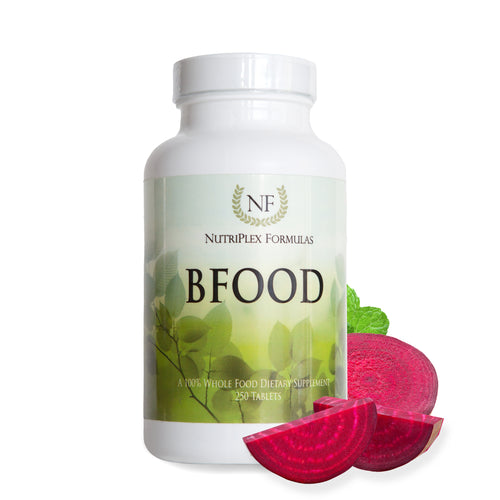
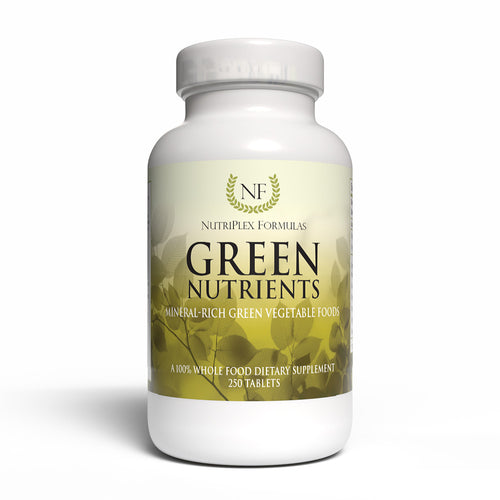
Pick up one of our bottles, say BFood or Green Nutrients, and read the label. You'll see names like beet root, alfalfa, brown rice bran, camu camu, carrot root. It reads like a grocery list.
Now pick up a typical multivitamin from a drugstore. You'll see names like pyridoxine hydrochloride, cyanocobalamin, ascorbic acid, dl-alpha tocopherol. It reads like a chemistry set.
That's the difference between food and chemicals. And it explains everything about the price. Chemicals are cheap, foods are expensive but worth it.

The Real Cost Drivers: A Formulator's View
I've been on both sides of this. I've seen how synthetic supplements are made and I've spent my career formulating real nutritional supplements. The cost difference isn't arbitrary.
Here's what's behind the price.
Sourcing Real Food Costs More Than Synthesizing Chemicals
Synthetic vitamin C (ascorbic acid) is produced through an industrial process that begins with corn syrup. The process is fast, cheap, and produces a consistent chemical. Factories around the world turn out tons of it.
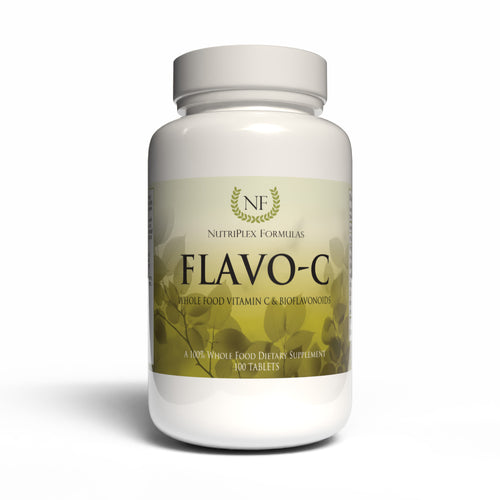
Now consider how we source vitamin C. The quick answer is that we don't. Instead, we offer the foods that contain vitamin C. Flavo-C contains camu camu, acerola cherry, and bilberry. These are real fruits from real farms. Camu camu grows in the Amazon basin. Acerola, like Camu camu, isn't your typical fruit found in your local grocery store. We need organic sourcing. We are concerned with seasonal availability, weather, crop variation, and supply chains that span continents.
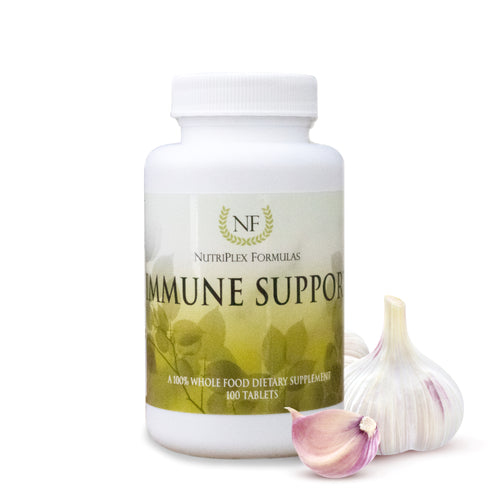
The same principle applies to every ingredient in every formula we make. The beet root and oat bran in BFood, the astragalus and Maitake mushroom in Immune Support, the organic greens in Green Nutrients. Every ingredient starts and ends as a real food from a real farm. This costs more than a chemical from a factory. It always will. Nature is worth it.
Providing Real Nutrients Costs More Than Pressing Chemicals Into Pills
Making a synthetic supplement is quick and cheap. You procure chemicals, mix them together, add fillers, preservatives, artificial coloring, and binders and press them into pills. The equipment is standardized and so are the chemical vitamins.
Making a whole food supplement is a different kind of work. The foods need to be carefully dried using low-heat methods or freeze-drying to preserve the enzymes, cofactors, and phytonutrients inside them. Excess heat destroys or greatly alters these compounds. So you can't rush it, and you can't cut corners without losing the very thing that makes whole food supplements worth taking.
After drying, the foods are carefully powdered, blended into our formulations, then tableted or encapsulated. Every step requires care to keep the food matrix intact. The equipment, the time, and the expertise all cost more.
The Value Is in the Complex, Not the Dose
Here's a common misconception about whole food supplements: the goal is to cram as much food as possible into a tablet. It isn't. You can't put a handful of blueberries into a tablet, and that was never the point.
The value of whole food supplements is in the nutrient complex — the naturally occurring combination of enzymes, cofactors, bioflavonoids, trace minerals, and phytonutrients that exist together inside a food. This complex is what makes food nutrition different from a chemical isolate. A synthetic vitamin delivers one molecule. A whole food delivers that nutrient within its original matrix of supporting compounds.
Working with real foods means working with natural variation. One harvest of camu camu may have a slightly different nutrient profile than the next. This is normal — it's how food works. But it means whole food supplement production requires more care, more flexibility, and more expertise than measuring out a consistent chemical compound. All of that adds cost.
Testing and Quality Control
All supplement manufacturers are required to test for substances like microbials and heavy metals. That's standard across the industry.
The difference is that working with whole foods introduces natural variation. Each lot of raw food material has its own nutrient profile depending on where it was grown, the soil conditions, the season, and the harvest. This isn't a flaw — it's the reality of working with real food instead of a standardized chemical compound. But it means each batch requires careful verification to confirm the foods are clean, safe, and contain the complex of nutrients they're known for.
This kind of quality control takes more time and costs more than testing a single chemical with a known molecular structure. It's one of the less visible costs behind every bottle.
Shelf Life Means More Frequent Production Runs
Real food has a shorter shelf life than synthetic chemicals. That's actually a good sign. It means the food in the supplement is still biologically active. But it does mean smaller batch sizes and more frequent production runs compared to a synthetic vitamin that can sit on a shelf for years without changing.
More frequent production means more frequent sourcing, more frequent testing, and more overhead per bottle. All of this adds cost, as you can imagine.
Scale Works Against Whole Food Supplements
Synthetic vitamins are produced at massive industrial scale worldwide by only a handful of manufacturers. The factories are enormous. The raw materials (corn syrup, coal tar derivatives, industrial chemicals) are cheap and abundant. The rules of mass production apply.
Whole food supplementation is a smaller world. The number of companies actually formulating from real food is very small compared to the synthetic supplement industry. We don't have the same economies of scale, and the nature of our ingredients doesn't allow for it. You can't manufacture camu camu or brown rice the way you can produce ascorbic acid in a chemical plant.
All of these cost drivers come back to the same thing: preserving the food matrix containing the helper nutrients, the enzymes, the phytonutrients. These factors make food nutrients different from chemicals.

The "Food-Based" Deception
I wish more people knew about this part. There's a middle category of supplements that has confused the market for years, and it's costing consumers a lot of money.
Way too many supplement companies have figured out how to charge whole food prices for synthetic vitamins. The trick is a process called "food-basing," and here's how it works.
A company grows yeast (usually Saccharomyces cerevisiae) in a vat. During the growth process, they add synthetic vitamins to the growth medium. The yeast uptakes and metabolizes these synthetic chemicals. The company then harvests the yeast, dries it, and puts it in a bottle labeled "food-based," "food-grown," "food-cultured," or sometimes even "whole food."
Another way of cheating the customer is for a company to put real, whole foods in their formulas and then spike, or enrich, the product with isolated, synthetic vitamins and minerals. So it's whole foods plus isolates, which is not really whole foods. It's technically food-based, but it's not solely foods like you believe you're getting.
But no real, natural foods undergo this artificial process.
I want to be fair here. I'm not saying every company is acting in bad faith. Some of them believe the yeast fermentation adds value. Or their products should be "standardized" to a certain quantity of isolated vitamins. But the core fact remains: the vitamin is manufactured in a laboratory, introduced to a biological medium (or a whole food) that is artificially manipulated or added to, and/or grown in a chemical soup. The nutrient doesn't really come from a natural food grown the way only nature can grow it. It comes from a lab.
How to Spot It on a Label
Look at the Supplement Facts panel on the bottle. If you see both chemical names and food names on the same label, that's the tell.
Here's what to look for:
Chemical names that indicate a synthetic source:
- Vitamin C ascorbic acid
- Thiamine mononitrate
- Pyridoxine hydrochloride
- Niacinamide
- Cyanocobalamin
- Vitamin A palmitate
- Folic acid (this one is always synthetic; it does not exist in nature)
- dl-alpha tocopherol (the "dl" prefix always means synthetic)
- Mixed tocopherols
- Beta carotene (when listed as an isolated compound)
- Zinc chelate, zinc picolinate, copper chelate, or other isolated mineral combinations
If you see these names alongside food-sounding words like "organic food blend," "cultured media," or "food-grown," etc., the supplement is food-based, not whole food. A synthetic chemical was introduced to a food medium during production. The vitamin itself is laboratory-made.
A genuine whole food supplement lists the food as the source of its nutrients. Period. You see camu camu, not ascorbic acid. You see wheat germ or beet root, not pyridoxine hydrochloride or vitamin E. The nutrient was never separated from its food.
Why This Matters for Your Money
This is the part that we need to get across. Food-based, enriched, standardized supplements are often priced the same as whole food supplements. Sometimes higher. The marketing language and strategy are designed to make you feel like you're getting real food nutrition. But the actual vitamin in the bottle is the same synthetic chemical found in the $15 drugstore brand. The price is geared toward a specific market. Some people feel that expense is always related to quality. It isn't, and an isolated chemical is always just a chemical.
You're paying a premium for a process or marketing angle, not for food.
When I formulated the supplements we offer at Whole Food Formulas, I made a decision from the very beginning: no synthetic vitamins added, period. This was an easy decision to make, because isolated vitamins are against my philosophy of healing only with nature's bounty. Nature doesn't make anything isolated; it is always whole.
The nutrients in our formulas come from the foods themselves. They are never chemicals. They are never sprayed onto yeast or cultured in a growth medium. They are foods, dried and preserved with their full nutrient complexes intact.
Our gold standard for real food is reflected in our costs and selling price.
Comparison Table: Whole Food vs. Synthetic vs. "Food-Based"
Use this table the next time you're looking at a supplement bottle. It covers the differences that matter most.
| Whole Food | Synthetic | "Food-Based" | |
|---|---|---|---|
| What's on the label | Food names: beet root, camu camu, alfalfa, acerola cherry, liver, maitake mushroom, spinach | Chemical names: Vitamin C ascorbic acid, pyridoxine HCl, cyanocobalamin, dl-alpha tocopherol | Mix of both: chemical names alongside "organic food blend," "cultured media," or similar |
| How it's made | Real foods are dried (low-heat or freeze-dried), powdered, and compressed into tablets or capsules | Chemicals are synthesized in a lab (e.g., ascorbic acid from a process beginning with corn syrup), then pressed into pills | Synthetic vitamins are added to a yeast or food culture during growth, harvested, then dried and tableted. Or foods are "standardized" with isolated vitamins and minerals. |
| Cofactors included? | Yes — enzymes, bioflavonoids, trace minerals, carotenoids, vitamins, phytonutrients remain naturally intact | No — isolated chemical only, artificial, even when called "natural" | Some food compounds present from the yeast/culture, but the "nutrients" are added as artificial chemicals |
| What your body receives | Organically grown nutrients inside their original food matrix, recognized by the body and offered as food | An isolated chemical your body must find its own cofactors to utilize | A synthetic chemical inside a yeast or food carrier — still a synthetic molecule at its core |
| Typical price range | $30–50 per bottle | $8–20 per bottle | $25–50 per bottle (whole food prices for unnatural foods) |
| Shelf life | Shorter — biologically active food has a natural lifespan | Long — stable chemicals can sit for years | Medium — the yeast/food carrier has some biological activity |
| Who makes it | Small-batch formulators working with farms and food suppliers | Large chemical manufacturers at industrial scale | Mid-size to large supplement brands using contract manufacturers |
| Common fillers/additives | Minimal — tableting agents only (e.g., cellulose for binding) | Titanium dioxide, artificial colors, hydrogenated oils, stearates, polyethylene glycol, disodium phosphate, and others | Varies — often cleaner than synthetic but check the "Other Ingredients" section. Often contains stearic acid, disodium phosphate, etc. |
| How to identify on a label | Supplement Facts lists food names as sources. No chemical vitamin names | Supplement Facts lists chemical names. No food sources | Both chemical names, food/culture names, and isolated vitamins appear on the label |

Why Cheaper Isn't the Right Math
Most people compare supplements by price per bottle. This makes sense for things that are basically identical, like generic versus brand-name aspirin. But supplements are supposed to contain nutrients! The price per bottle comparison misses the "it factor" that actually matters: What is your body meant to ingest, and are you getting all the needed food factors?
A synthetic vitamin delivers a single isolated chemical. Your body receives that molecule and has to figure out what to do with it. To process that nutrient, your body needs cofactors: the enzymes, bioflavonoids, trace minerals, and other compounds that normally accompany the nutrient in a real food. If those aren't in the pill, your body tries to pull them from its own reserves. One system gives up what another system needs. And if those reserves are already low, the math doesn't work.
A whole food supplement delivers the nutrient the way it exists in nature: within its full complex of supporting nutrients. The cofactors are already present. Your body recognizes it as food and uses it accordingly.
This is not a theoretical distinction. Dr. Rui Hai Liu, a food scientist at Cornell University, has spent years studying what he calls "food synergy," the way nutrients in whole foods work together in combinations that isolated compounds can't replicate. His research found that the antioxidant activity of fruits and vegetables comes from the complex mixture of phytochemicals present in whole foods, not from any single compound. This is nothing new to me or others who have discovered the richness and healing potential of nature, but it's good to see that leading scientists are getting onboard.
There are more than 25,000 identified phytonutrients in fruits and vegetables. When you eat an apple, you're not just getting "vitamin C." You're getting hundreds of constituents working together. When you take an ascorbic acid tablet, you're getting one chemical made in a lab.
The better question to ask yourself: "Is my $15 bottle actually providing my body with real nutrients?"
What Does the Difference Feel Like?
People who switch to our whole food supplements often describe it the same way: they feel different. More sustained energy, not a spike and crash. Better sleep. Fewer of those nagging background issues that never quite resolve. What they don't see is how cells happily use the nutrients.
Through its foods, nature takes its course. Sometimes within hours for people who have significant deficiencies, more often over weeks and months as the body builds health with the nutrients it's been missing.
I'm not making promises. Every person's body is different; and real, natural healing is a natural process that takes time. But the consistent pattern I've seen over 30 years of clinical practice is that people respond differently to real organically grown foods than to synthetic chemicals. See how your body responds and feels. That's the best test there is.

How to Read a Supplement Label
You don't need a nutrition degree to figure out what's in your supplement bottle. Here's a practical checklist. For a deeper walkthrough, see our guide on how to tell if your vitamins are synthetic.
Check the Supplement Facts Panel
If you see chemical names, it's synthetic:
- Ascorbic acid, calcium ascorbate, sodium ascorbate
- Thiamine mononitrate, thiamine hydrochloride
- Pyridoxine hydrochloride, pyridoxine HCl
- Cyanocobalamin, methylcobalamin (isolated)
- Folic acid (always synthetic; does not exist in nature)
- Retinyl palmitate, vitamin A palmitate
- dl-alpha tocopherol, tocopheryl acetate
- Niacinamide, nicotinic acid
- Mixed tocopherols (isolated, lab-made vitamin E chemicals)
- Ergocalciferol, cholecalciferol (when isolated)
If you see food names, it's food:
- Acerola cherry, camu camu, amla, rosehips
- Beet root, carrot root, broccoli, spinach
- Brown rice bran, wheat germ, alfalfa
- Liver (Argentine, hormone-free)
- Maitake mushroom, astragalus, turmeric
- Spirulina, chlorella, barley grass
If you see both chemical names AND food names on the same label, it's "food-based," enriched, or standardized:
This is the label trick discussed above. The synthetic vitamin was added to a food or yeast culture during production. Or the isolated vitamins are mixed in with foods. You're paying whole food prices for a synthetic vitamin with a yeast fermentation step as the only difference from the drugstore brand.
Check the "Other Ingredients" Section
This is where fillers, binders, flow agents, flavorings, texturizers, preservatives, and coatings are listed. Some inactive ingredients are necessary to hold a tablet together, like some form of plant cellulose (fiber). But there are specific ingredients that should give you pause:
Red flags:
- Titanium dioxide (a whitening agent linked to concerns about intestinal absorption)
- Artificial colors (FD&C Red No. 40, Yellow No. 6, Blue No. 1, etc.)
- Vitamin C ascorbic acid
- Polyethylene glycol (a petroleum-derived compound used as a coating)
- Hydrogenated oils (trans fats used as fillers or binders)
- Disodium phosphate (a synthetic buffering agent)
- Stearates, stearic acid
- "Natural flavors" (these are not at all natural)
Check the Numbers
Look how the quantities of nutrients like vitamins and minerals are listed. If you see a precise, high milligram number (say, 500 mg of vitamin C or 50 mg of B6) alongside a food name listed lower on the panel, the vitamin was almost certainly added as an isolate. Foods don't deliver nutrients in such precise, uniform doses or tremendously high quantities. A genuine whole food supplement lists the food itself and you need to know that the nutrients are inherent in the foods, still within their original complexes.

Frequently Asked Questions
Why are whole food vitamins more expensive than synthetic?
Whole food supplements cost more because the ingredients are real foods sourced from farms rather than chemicals produced in factories. Every step costs more than synthesizing a chemical at industrial scale: sourcing organic foods, preserving nutrients through low-heat drying, verifying each batch of variable whole food ingredients, and managing shorter shelf life with smaller production runs. The cost per bottle reflects what you're actually getting — a chemical isolate or a food.
Are whole food vitamins worth the extra cost?
Yes, according to extensive research published in many scientific journals over the decades. If you want to give your body what it knows how to use and a product that is truly natural, food is the only substance it is biologically meant to consume. But if you want to fill a nutritional gap with a single isolated chemical, a synthetic vitamin will do that, though your body won't recognize it as food. If you want nutrients your body has evolved to recognize as food, containing the enzymes, bioflavonoids, carotenoids, amino acids, vitamins, and phytonutrients that your body instinctively knows how to use, whole food supplements deliver what synthetic pills cannot. Many of our clients tell us they feel a noticeable difference after switching. See how your body feels.
How can I tell if my vitamins are whole food or synthetic?
Flip the bottle over and read the Supplement Facts panel. If the ingredients are chemical names like Vitamin C ascorbic acid, pyridoxine HCl, vitamin A palmitate, thiamine, niacinamide, or cyanocobalamin, for example, you're looking at synthetic vitamins. If the ingredients are food names (acerola cherry, beet root, liver, alfalfa, spinach), you're looking at whole food supplements. If you see both chemical names and food names on the same label, you're likely looking at a "food-based" product where synthetic vitamins were added to a food or yeast culture, or where the foods were spiked or standardized with isolated minerals and vitamins.
What does "food-based" mean on a supplement label?
"Food-based" is a term that is unregulated. And purposefully confusing so you'll buy it. Typically it means synthetic vitamins were added to a yeast or food culture during production. The yeast metabolizes the synthetic chemical, and the company markets the result as food-derived. The vitamin still started as a lab-made chemical. It's not truly natural and it's priced like whole food while using artificially created raw materials. Look for chemical names alongside food names on the same label as a major hint.
Do whole food vitamins work better than synthetic?
The body uses nutrients from food differently than it processes isolated chemicals. Nutrients in whole food exist within a complex of cofactors (enzymes, bioflavonoids, trace minerals, and phytonutrients) that support absorption and use. Research by scientists like Dr. Rui Hai Liu at Cornell University has shown that the health benefits of food come from the complex mixture of compounds working together, not from any single isolated nutrient. This isn't news to those who understand the holism of nature, but it's a welcome confirmation. After 30 years of clinical practice, the consistent pattern I've observed is that people are meant to ingest nature's whole foods and not synthetic isolated vitamins and minerals made in a lab.
How much should I expect to pay for quality whole food supplements?
A quality whole food supplement typically costs between $30 and $50 per bottle, depending on the formula, the availability of the foods, and farming fluctuations. Whole foods are costlier than synthetic supplements ($8–$20 per bottle) and about the same price as food-based supplements ($25–$50), though food-based products use synthetic raw materials. The cost reflects real food ingredients, careful handling, important testing, and smaller-batch production. If you see a "whole food" supplement priced like a synthetic, check the label carefully. The ingredients tell a different story.
What are the cheapest whole food vitamins that actually work?
There's no shortcut here. Whole food supplements cost what they cost because real food, careful handling, and quality testing have a minimum price. You can't walk into a grocery store and ask for a discount on the organic foods that are grown without toxins, right? Any product claiming to be whole food at synthetic prices should make you look at the label more carefully. Rather than looking for the cheapest whole food supplement, look for the most transparent one. Read the ingredients. Go to the company's website and read about it. If every ingredient is an organically grown food you recognize and there are no chemical vitamin names on the label, you're on the right track. Our formulas contain real, natural, organic foods. Nothing synthetic added.
Can I just eat better instead of taking whole food supplements?
In an ideal world, yes. In fact, I always encourage you to eat a real-foods diet. But the reality for most people is that modern food supply, soil depletion, and daily life make it difficult to get optimal nutrition from diet alone. The typical diet rarely contains adequate supplies of fruits and vegetables — especially organic varieties. Whole food supplements aren't a replacement for eating well. They're tableted or powdered foods that support what your diet lacks. Think of them as the most nutrient-dense part of a good diet, delivered in a form you can take consistently. You are building health, not forcing it. The supplements support your goals to be healthier.
Products Mentioned in This Article

These statements have not been evaluated by the Food and Drug Administration. This product is not intended to diagnose, treat, cure, or prevent any disease.