
Stress Is a Natural Reaction: How to Support Your Body Through It

Everyone talks about stress as a mental or emotional problem.
Reduce your stress. Manage your stress. Practice mindfulness. Take a deep breath.
All of these things are true and the advice is useful. But it misses something fundamental.
Stress is a biochemical event that is helped through proper nutrition; and it is commonly instigated by the way the mind, emotions, and body work together as a protective system to keep you safe from a physical, verbal, or other kind of threat. I have written about this in length in my book "Stressing Out Over Happiness: exploring the effects of stress, meditation and happiness."
While stress is a natural response to threat, it causes health issues if chronic. Every time your body activates its stress response, it burns through specific nutrients — B vitamins, vitamin C, magnesium, and others — to produce the hormones and neurotransmitters that keep you functioning under pressure, and to keep stress from causing undue damage.
If you're looking for natural stress support supplements, the first question shouldn't be which supplement to take, but whether you have enough dietary nutritional support to address the stress and whether you're putting back what stress takes out.
This article explains how stress depletes your body nutritionally, why that depletion makes stress worse, and what to do about both to break the cycle.
How Stress Burns Through Nutrients
When your body perceives a threat — real or imagined, physical or psychological — it activates the hypothalamic-pituitary-adrenal (HPA) axis. Sounds complicated, because it sort of is. This triggers the adrenal glands to release cortisol, adrenaline, and norepinephrine. These hormones mobilize stored energy, sharpen focus, increase heart rate, redistribute blood to prepare for fight or flight, and prepare the body for action.
This system evolved for our human species to address short-term emergencies. The stressor appears, the response activates, the stressor passes, the body returns to baseline. Ideally. The nutrients used during the response are replenished through food, peace, and rest. Ideally.
The problem with modern stress is that it's chronic. The stressor doesn't pass. The mind and brain work together as if an emotional or mental threat is the same as a physical one. You might as well be face-to-face with a tiger in the jungle like our ancient ancestors when work deadlines, financial pressure, child-rearing, relationship strain, verbal abuse at work or home, and staring at a stack of bills to be paid keep the HPA axis activated on a regular basis. And every activation costs nutrients.
Key nutrients depleted by chronic stress:
| Nutrient | Role in Stress Response | What Depletion Feels Like |
|---|---|---|
| B-complex vitamins | Supports the synthesis of cortisol, adrenaline, norepinephrine, serotonin, and dopamine | Fatigue, brain fog, mood instability, anxiety, inability to focus |
| Vitamin C | Used in cortisol production (adrenals have the highest concentration of vitamin C in the body) | Fatigue, weakened immune function, slow recovery |
| Magnesium | Regulates the stress response, supports muscle relaxation, involved in over 300 enzymatic reactions | Muscle tension, poor sleep, irritability, headaches |
| Zinc | Supports immune function, modulates inflammation | Increased susceptibility to illness, slow wound healing |
| Iron | Oxygen transport to all tissues, including brain | Fatigue, cold hands and feet, difficulty concentrating |
| Bioflavonoid-rich foods and herbs | Chronic stress causes chronic and systemic inflammation that affect all the major organs of the body | Ongoing aches and stiffness, digestive and skin complaints, headaches, slower recovery |
The depletion isn't theoretical. It's measurable. Chronic stress can use up the raw materials your body relies on to produce energy, maintain mood, sleep well, and stay healthy, and it is often associated with system-wide inflammation.

The Stress-Nutrition Spiral
It gets worse. The nutrients that stress depletes are the same nutrients your body needs to handle stress.
B vitamins support production of the neurotransmitters (serotonin, dopamine, GABA) that help keep your mood stable and your mind clear. When B-vitamin status is less than optimal, those neurotransmitters can decline, and stress tolerance may decrease. Minor inconveniences can start to feel like major irritations, and small problems can feel overwhelming. Sleep quality may suffer too, since the brain relies on these same nutrients to produce the chemicals involved in deep sleep.
Foods and herbs that help the body with inflammation are important, because inflammation is a major side effect of unchecked stress on body and mind.
Magnesium regulates the stress response itself. It helps the HPA axis return to baseline after activation. When magnesium is low, the stress response stays elevated longer than it should. Your body stays in a low-grade fight-or-flight state even when there's nothing to fight.
Vitamin C supports adrenal function. Your adrenal glands contain the highest concentration of vitamin C in the body because they need it to produce stress hormones.
The result of stress can become a downward spiral:
Stress depletes nutrients → Depleted nutrients reduce stress tolerance and lead to inflammation → Lower stress tolerance means everything feels more stressful → More stress depletes nutrients faster
Breaking this cycle requires addressing both sides: reducing stress where possible, and replenishing the nutrients that stress is consuming.
Stress Lives in Your Body, Too
One more dimension worth acknowledging: emotional stress produces physiological changes. Nervousness triggers stomach upset. Fear affects cardiovascular function. Worry contributes to digestive problems. These are documented biochemical pathways.
In the 1960s, when women's contributions to science were marginalized and often stolen outright by their superiors, neuroimmunologist Candace Pert wrote a perennial best selling book, Molecules of Emotion, based on her years of research. Pert proved that emotions are not just contained in the mind and brain, but throughout the entire body, in all of the cells. She showed how stress is a systemic problem and not just a local one. And because it is system-wide, the inflammation and loss of immune function it causes is also system-wide.
Modern brain imaging has confirmed what traditional medicine from India and Asia has observed for millennia: specific emotional states affect specific organ systems. Chronic loneliness, for example, has been associated with health risks comparable to smoking — higher cortisol, poorer immune function, increased blood pressure, disrupted sleep.
The nutritional approach described in this article addresses the biochemical side of stress. But if you're carrying chronic emotional stress — unresolved grief, loneliness, depression, hypervigilance, persistent anxiety — nutrition alone won't fully resolve it. Feed your body what it needs, and also consider whether the sources of your stress need direct attention: a conversation, a change in lifestyle, increased exercise, more time with friends, professional support.

Comedy Quells Cortisol
Here's a curious detail. Research from Loma Linda University has measured the physiological effects of laughter on stress hormones and immune function. Here's what they measured:
- Watching 30-60 minutes of comedy measurably reduces cortisol, epinephrine, and other stress hormones
- Natural killer cell activity (a type of immune cell that targets infected and abnormal cells) increases during and after laughter
- Immunoglobulin A (which protects the upper respiratory tract) increases
- Gamma interferon — a key immune signaling protein — increases
- The effects persist the next day, not just during the laughter itself
Laughter produces general muscle relaxation, which is particularly useful for people whose stress manifests as tension headaches, neck stiffness, or jaw clenching.
This doesn't necessarily mean comedy is a cure, although Norman Cousins, editor of The Saturday Review, recovered from a life-threatening collagen illness (ankylosing spondylitis) in 1964 — by binge watching Marx Brothers movies in the hospital.
If you're spending your evening scrolling the news or watching crime shows (which activate the stress response), switching to a funny show seems to promise a measurable improvement in your biochemistry. This is a cortisol-lowering intervention in the form of one of the most natural things you can do. Why do you think people have loved comedy since the earliest days of our species? It feels good because it's doing something beneficial in the body.

Natural Stress Support Strategies
Eliminating stress completely — is not realistic. There are always new reasons to be stressed out. The goal is to make sure your body has what it needs to handle the stress you can't avoid.
Eat B-vitamin-rich food before your most stressful window
This is the single most practical piece of advice in this article. Identify the part of your day where stress is highest — the morning rush, afternoon meetings, bedtime battles with your children — and eat something B-vitamin-rich within an hour before or during it.
- Eggs before the morning rush
- Nutritional yeast on your lunch before afternoon meetings
- A handful of sunflower seeds during a stressful afternoon stretch
You're giving your body the raw materials it needs when it needs them most. This isn't just about supplements. It's about timing food to match your stress pattern.

Rebuild your B-vitamin base through daily food choices
The five best whole foods for B-complex vitamins, for daily consumption:
- Nutritional yeast — sprinkle on eggs, salads, popcorn, roasted vegetables
- Eggs — complete protein plus B vitamins, especially B2, B5, B7, and B12
- Leafy greens — spinach, kale, chard for folate and magnesium
- Beet — contains folate, iron, and nitrates that support oxygen delivery
- Sunflower seeds — B vitamins, magnesium, and glutamine for cellular energy
These foods appear in every article in this series because they are the foundation. If you eat three of these five foods daily, you're building a B-vitamin base that makes everything else — sleep, mood, stress tolerance — work better.
Move your body every day, in whatever form fits
Physical movement reduces cortisol, improves blood flow, and supports the delivery of nutrients to every cell. It doesn't have to be exercise in the formal sense. Walk at lunch. Stretch while your children are occupied. Dance in the kitchen. Ten minutes of yoga before dinner. Pushups and squats before showering.
Daily gentle (and rigorous if you prefer) movement is more effective for stress reduction than occasional intense exercise. Consistency is better than intensity.
Build in one recovery practice
Choose one:
- Pre-bed wind-down (10-15 minutes). The most effective single habit for calming the stress response. No screens, no phone, no planning. Just quiet.
- Comedy (30-60 minutes). A comedy podcast during your commute. A funny show (not a dark comedy) after the day is done. As described above, this has measurable effects on stress hormones.
- Meditation or deep breathing (even 10 minutes). Building on decades of pioneering work by Jon Kabat-Zinn and other mindfulness researchers, studies have shown that mindfulness meditation can influence brain regions involved in regulating the autonomic nervous system — the network that controls digestion, blood pressure, heart rate, and other involuntary functions often disrupted by chronic stress. How do you meditate? There are hundreds of guided meditations on youtube. Get comfortable and go on an inner journey to peace.
Preferably you can do all three consistently. They make a huge difference in your life!
Consider targeted nutritional support
When stress has been chronic — months or years of running in emergency mode — your daily diet alone may not quickly replenish what's been depleted. This is where targeted whole food supplementation can help.
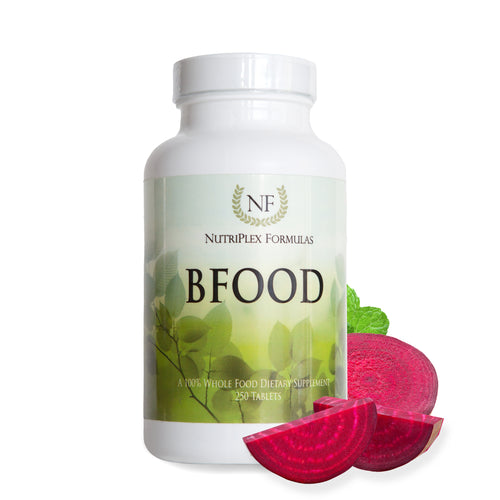
BFood provides a whole food B-complex from foods like wheat germ, beet, bovine liver, oat bran, and astragalus. These contain the B vitamins your body uses to produce neurotransmitters and manage the stress response — in the food form your body recognizes, with the cofactors intact.
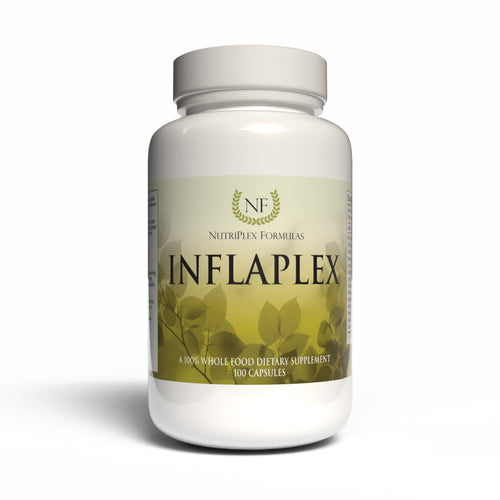
InflaPlex provides whole foods and herbs that help the body with inflammation. Unchecked stress is often associated with system-wide inflammation, and this formula supports the body's natural healing and repair process.
These work best as part of the broader approach described above: food timing, B-vitamin-rich meals, daily movement, and at least one recovery practice.
Frequently Asked Questions
Can natural stress support supplements replace stress management?
Working with stress is a multi-pronged approach. Meditation, exercise, and diet work together. And supplements support the body's stress-response system by providing the nutrients it needs. But they don't change the stressors themselves. The most effective approach combines nutritional support with practical stress management: food timing, movement, recovery practices, meditation, laughter, hobbies, addressing the sources of stress directly when possible, and so on.
Which nutrients are depleted first by stress?
B-complex vitamins and vitamin C are typically the first to be significantly impacted because they're water-soluble (not stored long-term) and play a direct role in stress hormone production. Magnesium is also rapidly affected because it's used in over 300 enzymatic reactions, many of which accelerate under stress.
How do I know if my stress is depleting my nutrients?
Common signs: persistent fatigue that doesn't resolve with sleep, brain fog, irritability out of proportion to the situation, difficulty focusing, mood instability, muscle tension that won't release, catching colds more often. Stress also commonly leads to psychosomatic symptoms — the mind informs the brain to send neurochemicals to a particular part of the body, causing physical distraction in the form of pain or reduced oxygen. If you recognize several of these alongside chronic stress, nutritional depletion is likely a contributing factor, but it's also important to find a qualified therapist to address how to relieve stress and trauma.
Does exercise make stress better or worse?
Regular movement is one of the most effective ways to support energy production, circulation, and stress resilience. Exercise temporarily increases stress hormones as part of a normal adaptive response, but over time it improves the body's ability to regulate stress and recover. The most beneficial exercise is the form of movement you can perform consistently while feeling stronger and well recovered rather than depleted.
Can laughter really reduce stress hormones?
Yes. Research from Loma Linda University documented measurable reductions in cortisol, epinephrine, and other stress hormones after 30-60 minutes of comedy viewing. The effects included increased natural killer cell activity and immunoglobulin A, and persisted the following day.
What's the difference between stress and anxiety?
Stress is typically a response to an identifiable external trigger. Anxiety can persist without a clear external cause and may be rooted in the subconscious mind. It is founded in a fear of what might happen in the future. All kinds of stress, despite the cause, respond to similar nutritional support. If anxiety is persistent and interfering with daily life, it has nutritional, biochemical, or psychological components and may benefit from professional guidance.
How long does it take to recover from nutritional depletion caused by stress?
This depends on the depth and duration of the depletion. People whose B-vitamin status is significantly less than optimal sometimes feel a difference within hours of taking a whole food B-complex. For most people, an approach that supports the compounding effect of better food, reduced caffeine, and supplementation becomes noticeable over 2-4 weeks. Full recovery from years of chronic depletion takes longer — weeks to months. Real, natural healing is a bodily process that takes time.
Should I take BFood and InflaPlex together?
They address different aspects of the stress problem. BFood feeds the B-vitamin pathway that produces energy and neurotransmitters. InflaPlex provides targeted nutrition to address systemic inflammation. For people dealing with the combined pattern of fatigue and chronic stress, they complement each other.
Products Mentioned in This Article

These statements have not been evaluated by the Food and Drug Administration. This product is not intended to diagnose, treat, cure, or prevent any disease.