
Why a Whole Food B Complex Beats Synthetic B Vitamins

Walk into any pharmacy or health food store and you'll find dozens of B-complex supplements. Most of them contain the same thing: synthetic vitamins manufactured in a laboratory, pressed into a pill, and sold with promises about energy and mood. But they are not foods, they are chemicals. Your body knows the difference.
If you've ever taken one and felt nothing, you're not alone. A whole food B complex supplement works differently — not because of the dosage, but because of the form. This article explains why the source of your B vitamins matters, what happens inside your body when you take synthetic versus whole food B vitamins, and how to tell the difference on a label.
What B Vitamins Do (and Why They Matter for Energy)
B vitamins aren't optional. They're coenzymes — small helper molecules that enzymes need to do their work. Without enough of them, the reactions that produce energy, build neurotransmitters, and keep your nervous system running well start to slow down.
What each one does:
| B Vitamin | Primary Role |
|---|---|
| B1 (Thiamine) | Converts food into cellular energy. Supports nerve function. |
| B2 (Riboflavin) | Helps cells produce energy. Antioxidant support. |
| B3 (Niacin) | Energy metabolism. Helps the body repair DNA. |
| B5 (Pantothenic Acid) | Supports adrenal function. Helps the body use fats and carbohydrates for energy. |
| B6 (Pyridoxine) | Supports the body's production of mood-related neurotransmitters like serotonin and dopamine. |
| B7 (Biotin) | Supports hair, skin, and nails. Helps the body process fats. Blood sugar support. |
| B9 (Folate) | DNA synthesis. Cell division. Critical during pregnancy. |
| B12 (Cobalamin) | Nerve function. Red blood cell formation. Brain health. |
These vitamins work as a group. Taking one in isolation — like a mega-dose of B12 — doesn't account for the way they function together inside cells. The B-complex is a system, and systems work best when all the parts (cofactors) are present.

The Problem with Synthetic B Vitamins
Most B-vitamin supplements are synthetic. This means the vitamin molecules are manufactured in a laboratory rather than contained in their original foods. The manufacturing process typically starts from petrochemical derivatives or industrial acids and produces a chemically defined molecule that looks like the vitamin under a microscope.
But a chemical that merely resembles a real vitamin is not the same as the vitamin, just as your face in the mirror is not actually you.
In food, B vitamins exist within a complex matrix: proteins, enzymes, lipids, carbohydrates, minerals, flavonoids, and other cofactors (helper nutrients). That matrix is not incidental packaging. It is functional. The cofactors help your body absorb, transport, and utilize the vitamin. When you isolate a vitamin from this matrix, you get a molecule without the other much-needed nutrients.
I've made this point for over 30 years: there's no such thing as a vitamin bush, a niacin tree, an ascorbic acid flower, or an herb called a "retinol." These are chemical compounds identified in laboratories. In nature, they exist only as part of a complex food.
Specific differences
Folic acid and folate are not the same thing. Folic acid is a synthetic form of vitamin B9, while folate refers to the naturally occurring forms found in foods. These are different molecules with different metabolic pathways. Folic acid must be converted into biologically active folate forms, primarily in the liver, and the body's capacity for this conversion is limited. When folic acid intake exceeds conversion capacity, unmetabolized folic acid may appear in the bloodstream.
Natural food folates are absorbed and converted through normal digestive and metabolic processes and enter folate metabolism in forms that are generally more readily utilized. Whole food B-complex supplements provide naturally occurring folate rather than synthetic folic acid.
Cyanocobalamin differs from food-form B12. Most synthetic B12 supplements contain cyanocobalamin — a molecule your body must convert before it can use. B12 from foods exists in forms that more closely resemble those found naturally in human metabolism.
Thiamine mononitrate differs from food-form thiamine. The synthetic form is found in most supplements and fortified foods. Your body can use it as a chemical, but it is devoid of the cofactors that accompany thiamine in whole foods such as wheat germ and nutritional yeast.
The Whole Food Difference
A whole food B complex supplement contains vitamins from actual foods, not from a chemical synthesis. The vitamins remain within the original food matrix, accompanied by the enzymes, minerals, and myriad cofactors they exist with in nature.
| Factor | Whole Food B Complex | Synthetic B Complex |
|---|---|---|
| Source | Actual foods (yeast, wheat germ, liver, beet root, etc.) | Chemical synthesis from petrochemical or industrial precursors |
| Cofactors | Present — enzymes, minerals, phytonutrients, bioflavonoids | Absent — isolated vitamin molecules |
| Form | Naturally occurring forms (folate, methylcobalamin, etc.) | Synthetic forms (folic acid, cyanocobalamin, etc.) |
| How body processes | Recognized as food, uses normal digestive pathways | Must be converted in the liver before use |
| MTHFR sensitivity | Food-form folate doesn't depend on MTHFR conversion | Folic acid requires MTHFR enzyme; some people convert poorly |
| What's on the label | Food names: wheat germ, beet root, yeast, liver | Chemical names: thiamine mononitrate, pyridoxine hydrochloride |
| Typical cost | Higher — growing and processing food costs more | Lower — chemical synthesis is inexpensive at scale |
| Typical dosage numbers | Lower (because the full complex is present, less is needed) | Higher (to compensate for lower utilization) |
The dosage difference is worth understanding. Synthetic B vitamins often list very high amounts (500% or 1,000% of the daily value). This isn't a feature; it's pharmacology, using vitamins as pharmacological agents instead of nutrients. The cofactors in a B-vitamin food are as important as the B vitamin itself. It is unnatural to take large doses of vitamin B, and in many cases it is the cause of mild to severe side effects.
How to Read the Label
You can tell the difference between whole food and synthetic B vitamins in about 10 seconds by looking at the ingredient list. Our full guide on how to tell if your vitamins are synthetic walks through the rest of the label.
Synthetic B complex labels list chemical names:
- Thiamine mononitrate or thiamine hydrochloride (B1)
- Riboflavin (synthetic, not from a food)
- Niacinamide (B3)
- Calcium D-pantothenate (B5)
- Pyridoxine hydrochloride (B6)
- Folic acid (synthetic B9)
- Cyanocobalamin (synthetic B12)
Whole food B complex labels list the foods themselves:
- Wheat germ
- Bovine liver
- Brewer's yeast or nutritional yeast
- Beet root
- Barley malt
- Oat bran
- Sunflower seed
- Organic fruits and vegetables
If the ingredient list reads like a chemistry textbook, it's synthetic. If it reads like a grocery list, it's food.
What a Whole Food B Complex Looks Like: BFood
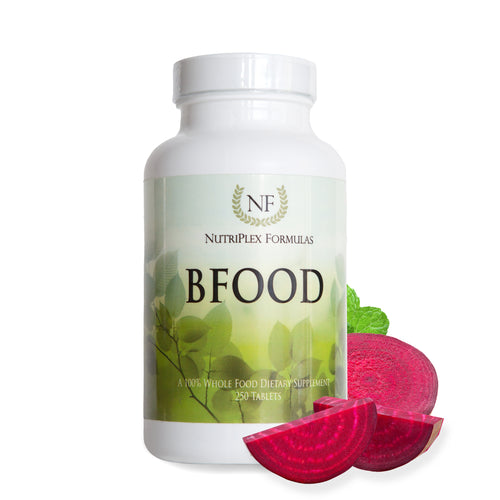
BFood is the whole food B-complex supplement I formulated for Whole Food Formulas. Its active ingredients are:
- Wheat germ
- Grass-fed, free-range bovine liver (Argentine-sourced, hormone/drug/steroid-free)
- Barley malt
- Organic astragalus root
- Organic oat bran
- Organic beet root
- Fig fruit
- Organic sunflower seed
- Organic date fruit
- Vanilla bean extract
Every ingredient is a food. The B vitamins in BFood are naturally present in these foods — they haven't been added synthetically or artificially for "enrichment." The foods themselves provide the cofactors, enzymes, and a panoply of nutrients that allow the vitamins to function inside your cells.
This is the approach I've used in clinical practice for three decades. What you're getting in our products that you are not getting in other products is natural, organically grown, whole foods in supplement form, not as isolated chemicals.

Who Needs a Whole Food B Complex?
B-complex deficiency is common. Several everyday factors deplete B vitamins faster than most people replace them:
- Coffee and caffeine — depletes water-soluble B vitamins (especially B1 and B12) through diuretic effects
- Chronic stress — increases demand for B vitamins in neurotransmitter and stress hormone production
- Refined sugar — requires B vitamins to metabolize, pulling from existing stores
- Birth control pills — documented to lower B6, B12, and folate levels
- Alcohol — impairs B-vitamin absorption in the gut
- Processed food diets — lack the B vitamins found in whole foods
- Intense exercise — increases B-vitamin demand for energy production
- Rapid cell turnover — the body draws on B vitamins as new cells develop and specialize
The coffee habit deserves its own mention, since it's the one most people are least willing to look at. We covered that pattern in detail in the caffeine-fatigue cycle.
The symptoms of B-complex deficiency overlap with what most people call "modern life": fatigue, brain fog, irritability, difficulty focusing, mood changes, trouble sleeping, and trouble thinking clearly. These symptoms build gradually and are easy to dismiss as stress or aging.
If you recognize several of these, a whole food B complex is worth considering — alongside the dietary changes that rebuild your B-vitamin intake from food. Even if your physician has you on prescription drugs, you still need foods to feed your cells. BFood is not competition or replacement, just a real, valuable source of nutrition.
Stress and the Adrenal Connection
One common contributor to persistent fatigue is inadequate intake or utilization of B vitamins, which play essential roles in mitochondrial energy production inside of cells. When cellular energy production declines, the body may rely more heavily on stress-response mechanisms, including the release of hormones such as cortisol and adrenaline that help mobilize stored energy reserves.
Because several B vitamins are also involved in the creation and regulation of stress-response pathways, chronic stress may increase the body's demand for them. Over time, poor nutrition combined with ongoing stress can contribute to a cycle of reduced energy production, greater physiological stress, and increasing fatigue.
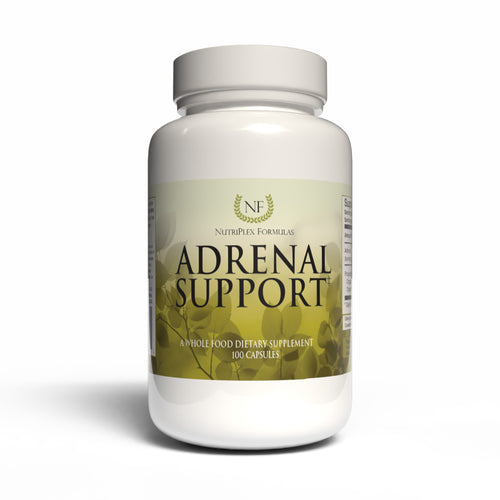
This is why BFood and Adrenal Support are designed to work together. BFood helps nourish the body's natural energy-producing pathways. Adrenal Support provides targeted nutrition for the systems involved in adapting to stress. Together, they support both energy production and stress resilience — two processes that are closely interconnected.
Chronic stress doesn't only deplete nutrients. Over time it also places a heavier load on digestion, circulation, and the body's ability to recover. InflaPlex provides whole foods and herbs that support the body's natural healing and repair process — useful alongside BFood and Adrenal Support when the depletion has been long-running.

What to Expect When You Switch to a Whole Food B Complex
If you've been taking a synthetic B complex and switch to a whole food supplement, a few things may change.
Don't be surprised if the milligram counts on the label look lower. Whole food supplements don't compete on milligrams. Isolated vitamin pills contain artificially inflated dosages of chemical vitamins. A smaller amount of a nutrient delivered with its cofactors can be more effective than a mega-dose of a synthetic form that your body struggles to use.
Give it time. Real, natural healing is a bodily process that takes time. You feed your body the needed nutrients and then nature takes its course. Some people notice a difference within days, especially those with significant deficiencies. For most, the changes happen over weeks and months. People describe steadier energy, a better mood, sharper focus, and easier digestion.
See how your body feels.
You may also find you need fewer supplements overall. A good whole food B complex supports so many systems — energy, mood, digestion, nervous system, cardiovascular function — that some of the individual supplements you've been stacking become unnecessary.
Frequently Asked Questions
Why are whole food B-complex supplements more expensive?
Growing, harvesting, and processing real food costs more than synthesizing chemicals. Whole food supplements also require more raw material per tablet because the vitamin is part of a larger food complex, not an isolated concentrate. The cost reflects what's actually in the product.
Why are the milligram counts lower on whole food B complex supplements?
Because milligrams only measure the weight of the isolated compound. A whole food B complex supplement delivers B vitamins within a food matrix that includes cofactors — the helper nutrients your body needs to absorb and use the vitamins. This matrix is more important than the vitamin count alone. A lower milligram count with cofactors intact can be more effective than a high milligram count without them.
Can I get enough B vitamins from food alone?
If you eat a varied diet rich in whole foods — including nutritional yeast, leafy greens, eggs, sunflower seeds, and meats — you can maintain healthy B-vitamin levels through food. But if your lifestyle leads to rapid burn-up of vitamin B or you've been depleted for years through stress, caffeine, or poor diet, your diet alone may not fully close the gap. A whole food supplement can fill in the necessary gap.
How do I know if my B complex is "food-based" vs. truly whole food?
Check the Supplement Facts panel. If individual B vitamins are listed at high, precise milligram doses alongside food ingredients, those vitamins were added synthetically during manufacturing. Some companies grow synthetic B vitamins in yeast and call the result "food-grown" or "food-cultured." But this is not natural, because real foods grow in real soil under the sun. A genuine whole food B complex lists foods as ingredients, and the nutrient amounts reflect what the foods naturally provide.
How long does it take for a whole food B complex to work?
Some people with significant deficiencies notice a difference within days. For others, the effect builds over weeks as the body rebuilds its stores. Consistency matters more than dosage.
Should I stop taking my synthetic B complex?
That's a decision to make with your healthcare practitioner. What we can say is that the form matters. If you've been taking a synthetic B complex without noticing any benefit, the form — not the dosage — may be the issue. The more you know, the better the choice you can make.
What about B12? Can I get it from a whole food supplement?
B12 is found naturally in animal foods, particularly liver. BFood contains grass-fed bovine liver, which is a natural source of B12 in its food form. However, B12 is not a primary benefit claim for any of our products because the amounts are part of the whole food complex, not added as an isolated nutrient.
What's the difference between methylcobalamin and cyanocobalamin?
Both are forms of vitamin B12, but they work differently in your body. To understand this requires a bit of biochemistry talk. Methylcobalamin and cyanocobalamin are not identical. Cyanocobalamin is the synthetic form used in most supplements. Before your body can utilize it, the attached cyanide group must be removed and the vitamin converted into active forms. Methylcobalamin is a naturally occurring form of B12 already found in foods and human tissues. BFood contains grass-fed bovine liver, which carries B12 in its food form — though B12 is not a primary benefit claim for any of our products, because the amounts are part of the whole food complex rather than added as an isolated nutrient.
Is BFood vegan?
No. BFood contains bovine liver, which is a cornerstone of the formula for its B-vitamin and mineral content. The liver is sourced from Argentina, from grass-fed, free-range cattle raised without hormones, drugs, or steroids.
How many BFood tablets should I take?
The standard recommendation is 6 tablets daily, spread through the day. When especially low on energy or stressed out, some practitioners recommend more. If you are unsure, consult your healthcare practitioner (someone who understands foods and not isolates) for guidance specific to your situation.
Can I take a B complex on an empty stomach?
You can, though a few people may find it easier on the stomach when taken with food. A whole food B complex like BFood is food in tablet form, so it tends to be gentler than synthetic versions.
Is it possible to take too much of a whole food B complex?
B vitamins are water-soluble, which means your body doesn't store large amounts of them. Excess is generally excreted. With a whole food B complex, the amounts reflect what the foods naturally contain, so mega-dosing isn't typically a concern the way it can be with high-dose synthetic formulas. That said, if you have specific health conditions or are on medications, it's always wise to consult a practitioner familiar with nutrition.
What's the difference between BFood and Whole Food supplement?
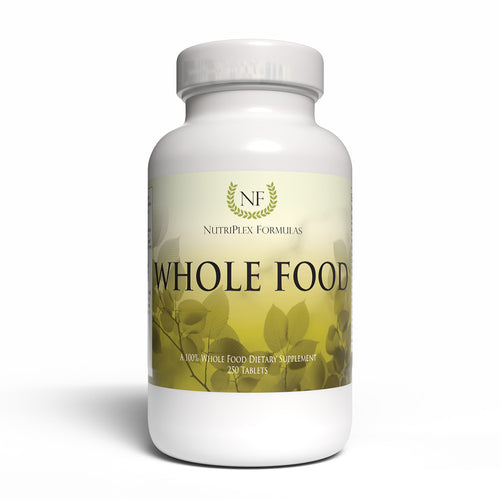
[Whole Food](https://wholefoodformulas.com/products/whole-food-complex-tabs) is a broad-spectrum whole food "multi" that provides a wide range of nutrients, including some B vitamins (it contains nutritional yeast, among other foods). BFood is specifically formulated as a B-complex — concentrated support for the B-vitamin system. They serve different purposes and are frequently used together.
Products Mentioned in This Article


These statements have not been evaluated by the Food and Drug Administration. This product is not intended to diagnose, treat, cure, or prevent any disease.